
The Capybara has achieved global adoration thanks to its unparalleled cute and chill persona. As the internet’s favorite giant rodent, it’s understandable why so many people look at that serene, blocky face and think, “I must have one as a pet! The idea of a personal, domesticated Zen master is certainly appealing, but the reality of owning a Capybara pet is vastly different from the viral fantasy.
Before you start researching breeders or clearing space in your backyard, it is crucial to understand that the Capybara is a complex, high-maintenance, semi-aquatic exotic animal. It is not a house cat or a typical pet rodent. This guide will walk you through the essential considerations, legal complexities, and immense dedication required to assess if welcoming a Capybara animal into your life is truly a responsible choice.
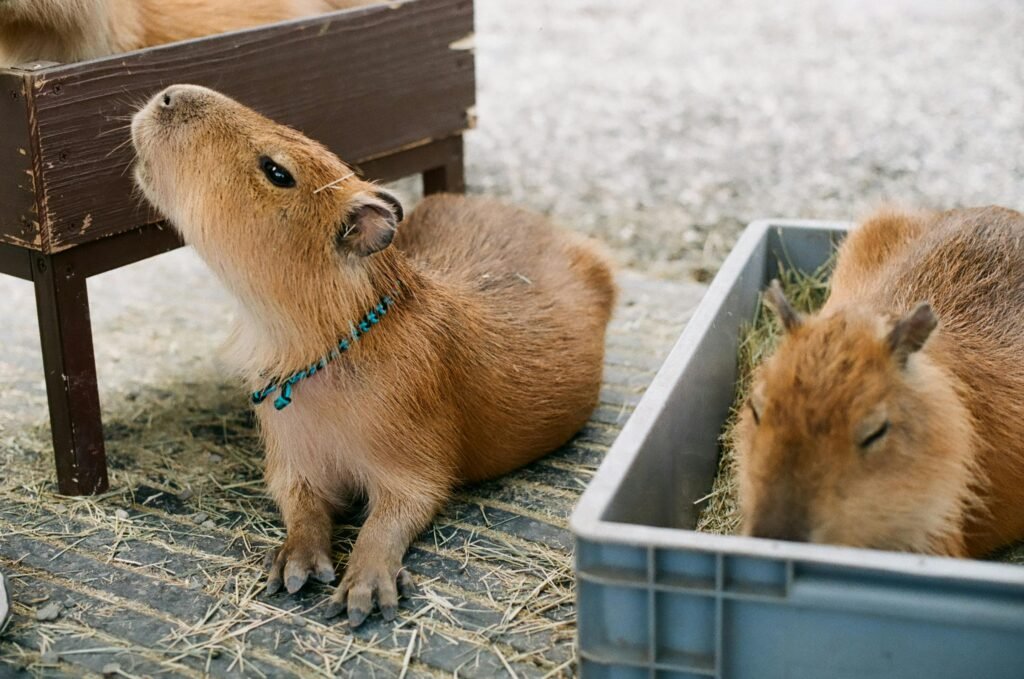
Legal and Ethical Hurdles of Owning Capybara Pets
The first and most critical step in considering a Capybara as a pet is legality. Capybaras are considered exotic animals and their ownership is heavily regulated (or outright banned) in many states and countries. The rules vary significantly, often depending on local laws concerning livestock, exotic mammals, or even specific rodent species.
You must meticulously research and comply with all local, state, and federal laws. This often involves obtaining special permits, passing inspections, and paying licensing fees. Skipping this step is not only illegal but can result in the animal being confiscated. Responsible pet ownership begins with respecting the law and the welfare guidelines designed to protect these animals [Source: Exotic Pet Laws in the U.S. and Internationally].
Ethically, you must consider whether you can truly replicate the Capybara’s complex wild environment. These animals belong in their native South American wetlands, and domestic ownership should only be considered by those who can provide an environment that meets every aspect of their sophisticated needs.
The Aquatic Requirement: Beyond a Kiddie Pool
The Capybara is a semi-aquatic mammal whose life revolves around water. They need water not just for drinking, but for exercise, escaping danger, mating, and, most critically, for temperature regulation (thermoregulation). Their coarse fur provides little protection from the sun, making regular immersion a daily necessity.
If you plan on owning a Capybara pet, you must provide a large, clean body of water deep enough for them to fully submerge their entire body and swim. A small backyard pond or a kiddie pool is wholly inadequate. The water must be filtered and maintained to prevent the growth of harmful bacteria, which can cause skin and eye problems for the Capybara animal.
This necessity translates into a significant, non-negotiable expense and daily chore. Without adequate, clean water access, a Capybara will quickly suffer from heat stress and various health complications. Their water requirement alone disqualifies them for life in an average suburban home.
The Social Demand: Why You Can’t Own Just One
In the wild, Capybaras live in herds, typically consisting of 10 to 20 individuals. They are intensely social creatures, and this communal life is fundamental to their psychological well-being. A solitary Capybara is a stressed Capybara.
If you are considering a Capybara as a pet, you should plan on acquiring at least two, preferably more. They rely on their herd for security, grooming, and companionship. Keeping a single animal isolated is considered inhumane and often results in the animal becoming depressed, anxious, and destructive.
This high social demand multiplies the cost, space, and time commitment exponentially. You must be prepared to dedicate hours every day to interaction, whether through bonding with a pair of Capybaras or spending time interacting with a solitary one if a group isn’t feasible (though grouping is always recommended). This is why we advocate so strongly for their natural social structures, which you can read more about here: Capybara Social Structures: The Herd Life.
Diet, Dental Health, and Veterinary Care
As the world’s largest rodent, the Capybara animal has specialized dietary needs, especially concerning its teeth. Like all rodents, their teeth grow continuously and must be worn down constantly through grazing and chewing.
Their diet must be primarily composed of grasses and hay (timothy hay, Bermuda grass, etc.) to ensure proper dental wear. This must be supplemented with specialized rodent pellets and fresh produce. Without the proper roughage, their teeth will overgrow, leading to serious pain, inability to eat, and ultimately, death. Regular checks by a specialized veterinarian are required to file or trim their teeth if overgrowth occurs [Source: Veterinary Care and Diet for Capybaras].
Finding a qualified veterinarian who has experience treating Capybaras is a significant challenge in most areas. They are exotic pets and require specialized knowledge; a standard dog and cat vet will likely not suffice. This specialized care is often expensive and rare, adding a critical layer of complexity to owning capybara pets.
Time and Commitment: The Capybara Pet Lifestyle
A Capybara can live for 8 to 10 years in captivity, representing a long-term commitment that should not be taken lightly. Furthermore, their sheer size and powerful jaw mean that training is essential, and they are not always predictable. They are not animals that can be simply contained; they require enrichment, space for grazing, and safety fencing.
Their docile nature, which contributes to the capybara cute moments, often leads to misinterpretation. While they are not inherently aggressive, they are wild animals that retain their instincts. They are most active at dawn and dusk (crepuscular), meaning their need for activity and care extends beyond regular daytime hours. Their powerful legs and ability to jump also mean that secure fencing (both to keep them in and potential predators (or curious neighbors) out) is a necessity.
In the end, choosing to bring a Capybara into your home should be driven by responsible commitment, not viral appeal. The majority of people simply do not have the land, the resources, the time, or the legal standing to offer these wonderful animals the life they deserve. For most, the most responsible and loving choice is to appreciate them from afar and support their conservation efforts. You can learn more about how you can help protect them in the wild by checking out our page on Capybara Conservation Efforts.
If you cannot provide the immense space, the constant clean water source, the dedicated companionship, and the specialized lifelong care required, then the answer to the question, “Is a Capybara pet right for you?” is a resounding no. Enjoy their chill persona on the internet, and let their real lives remain dedicated to the peace of the wetlands.