
The Capybara, officially known by its scientific name Hydrochoerus hydrochaeris, is far more than just the internet’s most chill animal. As the largest living rodent in the world, the Capybara animal boasts a unique set of biological features and adaptations that have allowed it to thrive in the complex wetland ecosystems of South America. Its anatomy, physiology, and behavior are perfectly engineered for a life shared between land and water.
Understanding these characteristics helps us appreciate the complexity of this magnificent creature beyond its cute demeanor. This deep dive explores the fascinating biology that makes the Capybara such a successful and distinctive animal.
Size, Structure, and Classification
The World’s Largest Rodent
The most defining characteristic of the Capybara is its impressive size. An adult Capybara can reach lengths of up to 1.3meters (4.2feet) and stand about 0.6meters (2feet) high at the shoulder. Weight can range from 35 to over 65kilograms (77 to 143pounds), with females generally being slightly larger than males. This makes it substantially larger than its closest relatives, the guinea pig and the rock cavy.
Taxonomic Identity
The Capybara belongs to the order Rodentia, the family Caviidae, and the genus Hydrochoerus. Its classification places it firmly within the group of Caviomorph rodents, which are typically found only in South America. The name Hydrochoerus literally translates to “water pig” or “water hog,” a nod to its semi-aquatic lifestyle and somewhat porcine appearance.
The Capybara’s Unique Coat and Body
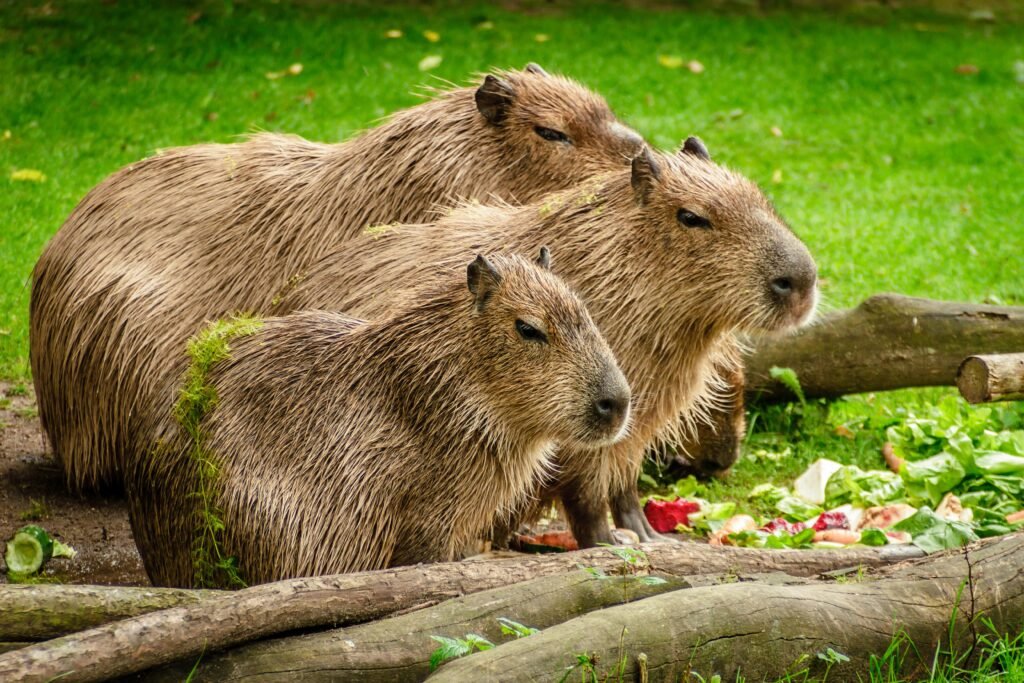
The Capybara animal is covered in a relatively thin, coarse coat of reddish-brown or grayish-brown hair. This coat dries quickly, which is crucial for an animal that spends so much time in the water. Beneath the fur, they possess a thick layer of fat that aids in buoyancy and insulation when submerged. Their bodies are barrel-shaped and robust, supporting their large mass.
Aquatic Adaptations: Built for the Wetlands
The Capybara’s semi-aquatic nature is reflected in several key anatomical features. Their biology is a testament to natural selection, perfectly tailoring them for life in swamps, marshes, and riverbanks.
Specialized Head and Sensory Organs
One of the most remarkable adaptations is the placement of their sensory organs. The eyes, ears, and nostrils are positioned high on the head, allowing the Capybara to remain almost entirely submerged while still being able to see, hear, and breathe. This posture is vital for thermoregulation in the tropical heat and for evading terrestrial predators like jaguars. When danger is present, they can hold their breath for up to five minutes, using the water as their primary defense mechanism [Source: Capybara Adaptations for Semi-Aquatic Life].
Feet and Locomotion
Their feet are another defining characteristic. Capybaras have four toes on their forefeet and three on their hind feet. All toes are connected by small, but effective, partial webbing. This webbing makes them surprisingly agile and powerful swimmers, enabling them to move through dense water vegetation and murky currents with ease. On land, they move with a characteristic trot or can gallop quickly when necessary, often looking slightly clumsy due to their large build.
Diet and Digestive System
Obligate Herbivores
The Capybara Ecology revolves around a strict herbivorous diet, consisting almost entirely of grasses and aquatic plants. An adult Capybara eats several kilograms of grass per day. Their dietary habits play an important role in shaping their wetland environment, grazing down vegetation and creating pathways for other species.
Teeth and Continuous Growth
As rodents, Capybaras possess large, constantly growing incisors, which are essential for gnawing and cutting tough grasses. Their cheek teeth (molars and premolars) also grow continuously and are worn down by the abrasive nature of their diet. Failure to graze sufficiently can lead to dental overgrowth, which is a serious health concern for a Capybara pet.
Hindgut Fermenters and Coprophagy
The Capybara has a unique digestive system that allows it to process the large volume of cellulose found in grass. They are hindgut fermenters, relying on specialized microorganisms in their large intestine to break down plant fibers. Critically, the Capybara practices coprophagy, meaning they consume their own feces (specifically, a soft, protein-rich type of fecal pellet produced in the morning) to maximize nutrient absorption and intake of necessary vitamins. This peculiar habit is biologically essential for their survival.
Reproductive Biology and Social Life
A High Reproductive Rate
Capybaras have a relatively high reproductive rate for their size. Females reach sexual maturity around 15months. After a gestation period of about 150days, a female typically gives birth to a litter of four to five precocial young, known as capy-pups. Being precocial means the pups are born with fur, open eyes, and the ability to walk and follow their mothers almost immediately.
Communal Parenting
Their social structure is highly organized, centered around a dominant male, several females, subordinate males, and juveniles. This herd structure enables communal care of the young, known as alloparenting. Pups will nurse from any lactating female within the group, an important biological trait that increases the survival rate of the young. This intense social reliance is what makes them appear so friendly and why keeping a lone Capybara pet is strongly discouraged. You can explore more about their fascinating social structures in our article: Capybara Social Structures: The Herd Life.
Scent Glands for Communication
Capybaras communicate using a variety of vocalizations (barks, whistles, purrs) and scent markings. Both males and females possess a prominent scent gland called the morbillo (or scent mound) on the top of their snout. Males have a much larger gland. They rub this gland on vegetation to mark territory and attract mates, a key biological mechanism for social cohesion and reproduction [Source: Scent Glands and Communication in Capybaras].
Health and Conservation Status
The Capybara is generally a robust species, but like all animals, it faces environmental and health challenges. In the wild, they are susceptible to parasites, particularly ticks, which can transmit diseases like Brazilian spotted fever.
Despite regional population pressures from hunting and habitat loss, the Capybara is currently classified as Least Concern on the IUCN Red List, reflecting its wide distribution and ability to adapt. However, their reliance on clean water makes them sensitive indicators of wetland health. Protecting the Animal Capybara Ecology means protecting the entire ecosystem. Their popularity and status as a possible, albeit challenging, Capybara as a pet highlight the need for education about their true biological needs. For those fascinated by their adaptations, learning about how we can support their environment is key, which you can read about in our commitment to Capybara Conservation Efforts. The Capybara is a biological marvel—a giant, gentle, water-loving rodent that demands respect for the complex science that makes its serene existence possible.