
If you are a resident of Germany or planning a trip to the Land of Ideas, you might be surprised to find that Germany is also a premier destination for fans of the world’s largest rodent. The capybara obsession has grown significantly in recent years, fueled by viral videos of these gentle giants lounging in hot springs or befriending other animals.
Germany boasts some of the most advanced and species-appropriate zoo enclosures in Europe. For those searching for a Capybara experience, the options are plentiful, ranging from the historic gates of Berlin to the modern, immersive habitats of Leipzig and Hamburg. At Capybara Happiness, we’ve tracked down the best spots where you can witness these Ambassadors of Chill in person.
The Rising Capybara Popularity in German Culture
The surge of capybara popularity in German households and media is no accident. In a culture that often values Ordnung (order) and efficiency, the capybara represents a refreshing contrast, a creature that is entirely unbothered, slow-moving, and perpetually relaxed.
German zoo-goers have embraced the Wasserschwein (the literal German translation for capybara, meaning water pig) as a symbol of tranquility. This has led many German zoological gardens to prioritize their capybara exhibits, often creating mixed-species enclosures that showcase the capybara’s famous ability to coexist peacefully with others.
Top Destinations: Which German Zoos Have Capybaras?
If you are looking for a reliable place to spot a capybara in Germany, several major cities offer fantastic viewing opportunities. Here are the top-rated zoos for capybara enthusiasts:
1. Zoo Berlin and Tierpark Berlin
Berlin is a double-win for fans. Both the historic Zoo Berlin (located in the city center) and the sprawling Tierpark Berlin (in the east) house these magnificent rodents. Zoo Berlin provides a fantastic habitat where you can observe their semi-aquatic lifestyle up close.
At Tierpark Berlin, which is Europe’s largest landscape zoo by area, the capybaras have ample room to roam. The park’s focus on spacious, naturalistic enclosures allows visitors to see the animals behaving exactly as they would in the South American wetlands.
2. Zoo Leipzig: The South American Adventure
Leipzig offers one of the most immersive experiences in Germany. Their Pampas and Pantanal themed areas are world-class. According to Zoo Leipzig, their capybaras are part of a vibrant ecosystem display, often sharing space with giant anteaters and Darwin’s rheas. This reflects the giant capybara‘s natural social structure and ecological role.
3. Tierpark Hagenbeck (Hamburg)
Hagenbeck is legendary for being the first zoo to use open, bar-less enclosures. Recently, Hagenbeck Zoo unveiled a new habitat specifically designed for lowland tapirs and capybaras. This 1,000-square-meter outdoor area includes a 1.8-meter-deep bathing pond, which is essential for the capybara’s well-being, as they spend much of their lives in water.
Why Germany’s Enclosures Are Special
When you visit a capybara in Germany, you aren’t just looking at an animal in a cage. German zoological standards are among the highest in the world, focusing on Enrichment and Landscape Immersion.
The Multi-Species Approach
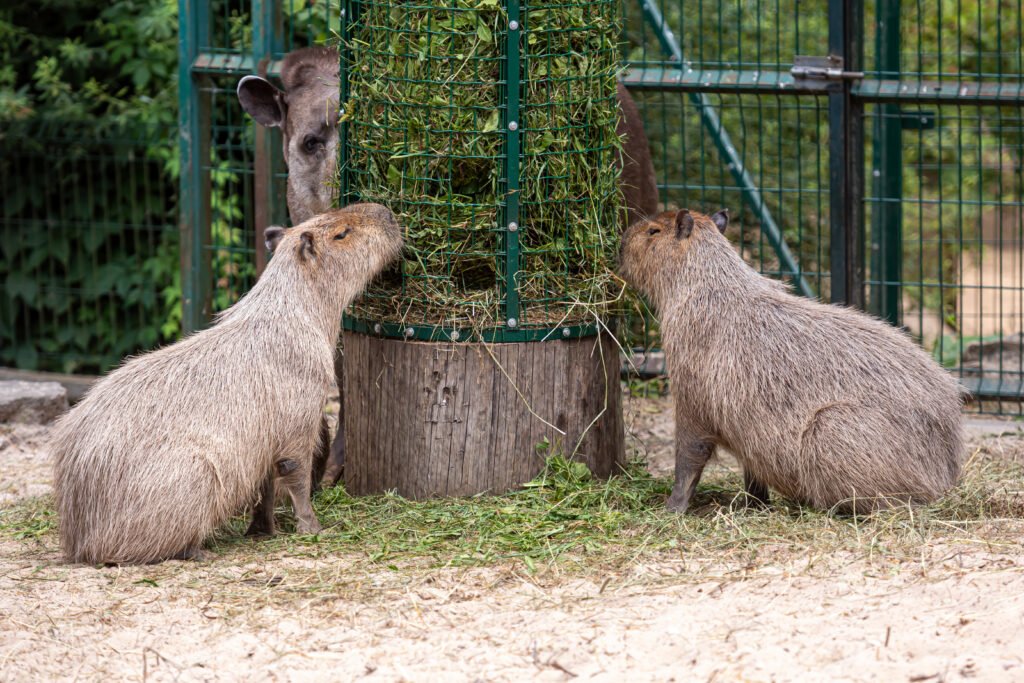
German zookeepers often house capybaras with other South American species. You will frequently see a capybara in German zoos sharing a meadow with alpacas, rheas, or anteaters. Because capybaras are non-aggressive and social, they act as the social glue of these exhibits, creating a harmonious environment that is peaceful to watch.
Indoor and Outdoor Flexibility
Because German winters can be quite cold, zoos provide sophisticated indoor heated shelters. Many, like the one in Hamburg, feature indoor bathing pools so the capybaras can enjoy their aquatic lifestyle year-round, regardless of the snow outside. This ensures that the animals remain healthy and chill even when the temperature drops.
Tips for Your Capybara Zoo Visit
To make the most of your visit, keep these tips in mind:
- Check Feeding Times: Many German zoos, like Leipzig and Frankfurt, have public feeding sessions. This is the best time to see the capybaras active and vocalizing.
- Visit the Streichelzoo: While most capybaras are in protected enclosures, some smaller wildlife parks in Germany (Tierparks) occasionally have contact areas or walk-through enclosures where you can get a closer look.
- Look for the Wasserschwein Label: Don’t be confused by the name! In Germany, the sign will almost always say Wasserschwein.
- Patience is Key: Capybaras love to nap. If you don’t see them at first, check the water or the shaded corners of the enclosure.
Education and Conservation in German Zoos
Visiting a capybara in Germany is about more than just a cute photo opportunity. German zoos are heavily involved in international breeding programs and conservation efforts. By purchasing a ticket, you are often supporting the protection of the South American wetlands where these animals originate.
As we advocate at Capybara Happiness, education is the key to conservation. German zoos excel at providing detailed information about the capybara natural predators and the environmental challenges they face. Learning about their unique biology (like their webbed feet and ever-growing teeth) helps visitors appreciate them as more than just a viral trend.
Final Thoughts: A German Capybara Adventure
Whether you are in Berlin, Hamburg, or Leipzig, the Capybara Zoo Deutschland experience is a must for any animal lover. The care and respect shown to these animals in German facilities align perfectly with our mission to celebrate the capybara with the admiration they deserve.
Germany has truly become a secondary home for these South American icons. By visiting these zoos, you get to witness the power of peaceful coexistence firsthand. So, the next time you find yourself in Deutschland, make sure to say Hallo to the local Wasserschwein!