
If you have ever scrolled through social media and thought, I absolutely need a giant, semi-aquatic rodent in my life, you are not alone. The capybara has become a global sensation, known for its stoic face and chill attitude. However, before you start looking for a capybara cost estimate, it is vital to understand that these animals are not your average house pet.
At Capybara Happiness, we are dedicated to advocacy and education. While capybaras are undeniably charming, they are high-maintenance exotic animals with very specific (and expensive) needs. If you are serious about understanding the financial commitment, let’s break down the real-world price of capybara ownership.
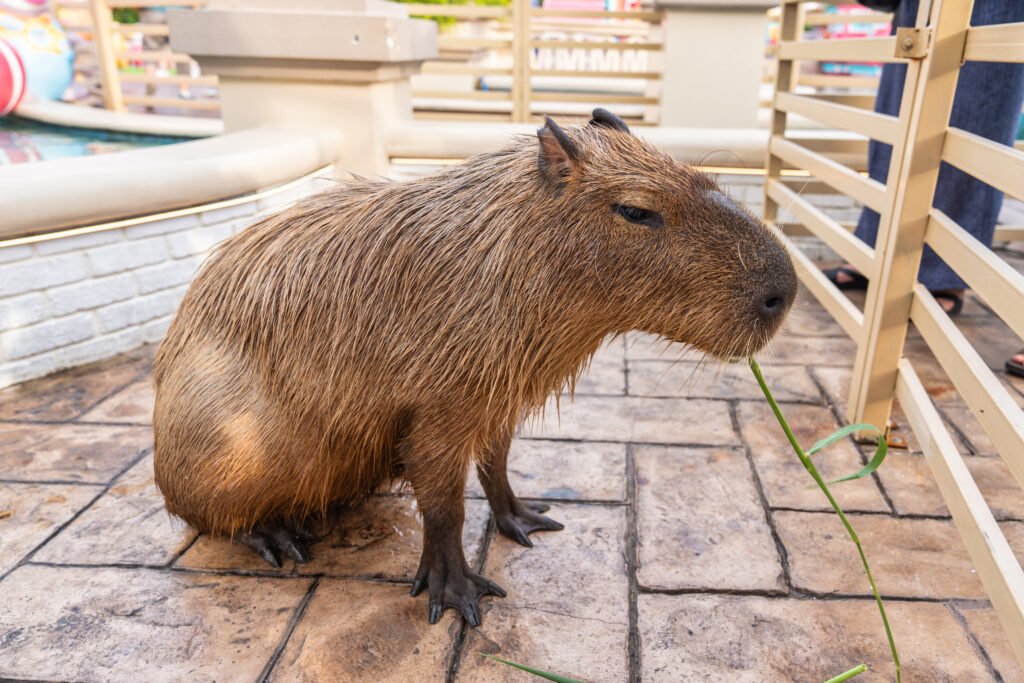
The Initial Investment: Buying a Capybara
The first hurdle in your journey is the purchase price of the animal itself. You won’t find these guys at a local pet store. You will need to find a reputable exotic animal breeder, and even then, there is often a waiting list.
According to The Spruce Pets, the initial cost for a single capybara typically ranges from $1,000 to $3,000. However, this is just the baseline. Females are often more expensive due to their breeding potential and generally larger size. Furthermore, if you are looking for a young, hand-raised “pup,” you might see prices climb upward of $5,000.
The “Double the Trouble” Rule
There is a catch to that $1,000 price tag, you can’t just buy one. Capybaras are incredibly social creatures that live in large herds in the wild. Keeping a single capybara is considered borderline inhumane as they can become severely stressed or depressed without a companion of their own species. Therefore, when calculating the capybara price, you must immediately double your budget to account for at least two animals.
Housing and Habitat: Building a Private Oasis
The purchase price is actually the most affordable part of owning a capybara. The real budget-buster is the habitat. These animals are semi-aquatic, meaning they spend about 50% of their lives in the water.
You cannot keep a capybara in a bathtub or a small backyard. They require a large, secure outdoor enclosure (at least 12 by 20 feet) with a sturdy fence that is at least 4 to 6 feet high to prevent escapes.
The Pool Factor
An essential part of the cost of capybara care is a permanent water feature. A simple plastic kiddie pool won’t cut it. You need a pond or an in-ground pool that is deep enough for them to fully submerge (at least 3.5 to 4 feet deep).
Building a custom, filtered pool that can handle capybara waste (which they typically deposit in the water) can cost anywhere from $5,000 to $25,000 depending on the scale and filtration system. Without a high-end pump and filter, you will be spending hours every week manually scrubbing and refilling the pool.
The Ongoing Expenses: Food and Upkeep
Once the habitat is built, the daily expenses begin. Capybaras have massive appetites. As the Master of the Grasses, an adult can consume 6 to 8 pounds of vegetation every single day.
Monthly Feeding Costs
Your capybara diet will consist primarily of high-quality timothy hay, fresh grass, and specialized guinea pig pellets (which provide essential Vitamin C). In the winter, when fresh grass is scarce, you can expect to spend $50 to $150 per month on hay and supplements alone for a pair of animals.
Veterinary Care: The Exotic Surcharge
Finding a vet for a capybara is perhaps the most difficult part of ownership. Standard small-animal vets are rarely equipped to handle a 140-pound rodent with specialized dental and digestive needs.
You will need a licensed exotic animal veterinarian. A simple well-pet checkup can cost $200 to $400. Because their teeth grow continuously throughout their lives, any dental issues can lead to floating or trimming procedures that cost upwards of $1,000. Emergency surgeries or illnesses can easily reach into the multi-thousand dollar range, making pet insurance for exotics a wise (though also costly) investment.
Hidden Costs: Permits and Legal Fees
Before buying a capybara, you must ensure it is legal in your state, county, and city. Many jurisdictions require an Exotic Animal Permit.
- Permit Fees: Usually $50 to $200 annually.
- Inspections: Some states require a wildlife officer to inspect your enclosure before a permit is granted.
- Liability Insurance: Because they are large wild animals that can bite when stressed, some homeowners’ insurance policies require an additional liability rider.
Is the Cost Worth It?
When you add up the initial purchase, the custom pool, the fencing, the permits, and the monthly food and vet bills, the first-year capybara cost can easily exceed $10,000 to $15,000.
For most people, the better (and much cheaper) way to experience Capybara Happiness is to visit them at accredited zoos or sanctuaries. By supporting these organizations, you help ensure that capybaras are cared for by professionals who have the resources to meet their complex needs.
Quick Cost Breakdown Table
| Expense Category | Estimated Cost (Initial) | Monthly/Annual Ongoing |
| Purchase (Pair) | $2,000 – $6,000 | N/A |
| Enclosure & Fencing | $1,500 – $5,000 | Minimal |
| Filtered Pool/Pond | $3,000 – $20,000 | $50 (Utilities) |
| Food & Hay | N/A | $100 – $200 |
| Exotic Vet Care | $500 (Checkup/Fixing) | $300+ |
| Permits/Licensing | $100 – $500 | $50 – $200 |
Final Thoughts
The capybara is a remarkable animal that deserves our respect and admiration. While the idea of having one in your backyard is tempting, the financial and logistical reality is a massive undertaking. If you truly love these creatures, the best cost you can pay is the time spent learning about their conservation and protecting their natural habitats in South America. Stay tuned to Capybara Happiness for more deep dives into the lives of these magnificent gentle giants!