When you first catch a glimpse of a large capybara emerging from the tall grasses of the South American wetlands, you might be forgiven for doing a double-take. With its thick, coarse fur, robust frame, and stoic expression, this creature often looks more like a misplaced cub than a member of the rodent family. This uncanny resemblance has earned it the nickname the fluffy wetland bear among enthusiasts and nature photographers alike.
At Capybara Happiness, we are captivated by the unique physical presence of this capybara bear. Beyond the viral memes, there is a complex biological story explaining why these creatures grew to such impressive proportions. This article explores the anatomy, history, and lifestyle of this Stocky, Barrel-Shaped Giant, shedding light on how it became the heavyweight champion of the rodent world.
The Anatomy of the Modern-Day Mega-Rodent
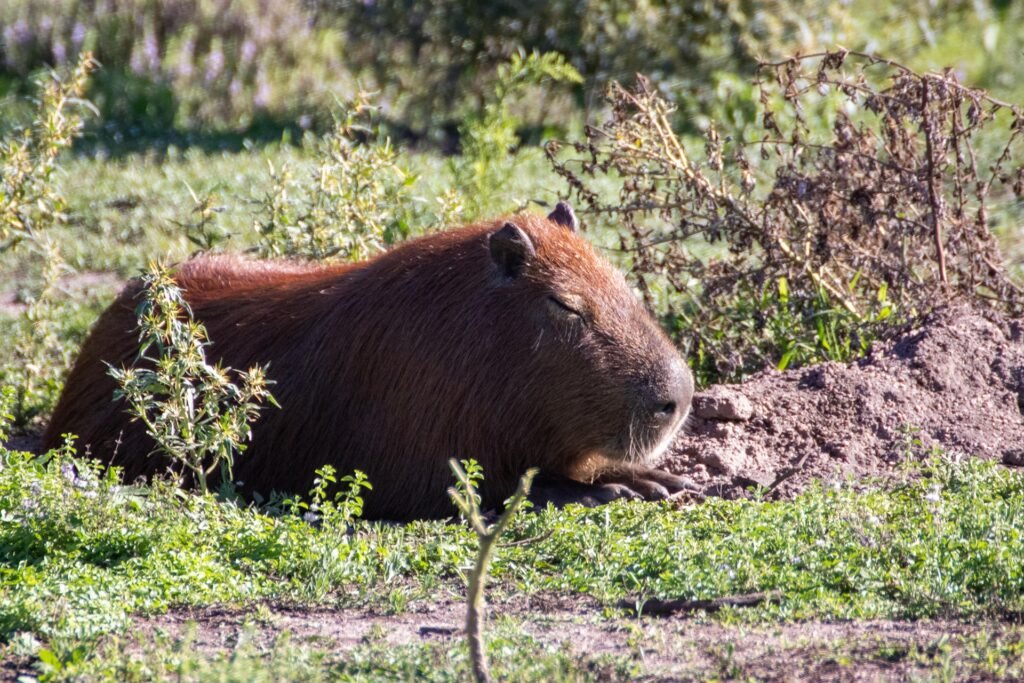
To understand the scale of a large capybara, one must look at the numbers. While your typical backyard squirrel might weigh a pound, a fully grown capybara can tip the scales at an astonishing 140 to 170 pounds. Standing about two feet tall at the shoulder and stretching over four feet in length, they truly earn the title of The Grizzly-Sized Rodent within their taxonomic order.
Their bear-like appearance is largely due to their dense, barrel-shaped torso and thick neck. Their fur is not soft like a hamster’s, instead, it is long, brittle, and sparse, which allows it to dry quickly after a swim. This coat, combined with their heavy-set jaw and blunt snout, creates a silhouette that is strikingly similar to a small brown bear or a wombat.
According to the San Diego Zoo Wildlife Alliance, this body plan is an evolutionary masterstroke for a semi-aquatic life. Their weight provides the ballast needed for stable swimming, while their thick skin protects them from the thorny undergrowth of the riverbanks. For those of us who love capybara, seeing these giants in person is a reminder of nature’s ability to scale up a familiar form into something magnificent.
Evolutionary Roots: When Rodents Were Actually Bear-Sized
While the modern large capybara is certainly big, it is lightweight compared to its prehistoric ancestors. Millions of years ago, South America was home to mega-rodents that would make today’s specimens look like mice. The most famous of these was Josephoartigasia monesi, a creature that lived approximately 3 million years ago.
This ancient relative was truly a bear-like large capybara, estimated to have weighed over 2,000 pounds, roughly the size of a modern bison or a large cow. Scientists believe these giants used their massive incisors much like elephants use tusks, for defense and digging. While they eventually went extinct, the modern capybara remains the last standing sentinel of this era of island gigantism in South America.
Today’s Modern-Day Mega-Rodent has scaled down to survive more efficiently in changing ecosystems, but it retains the robust skeletal structure of its ancestors. You can learn more about their place in the animal kingdom on our Capybara Happiness Website, where we explore their quiet wisdom and ancient lineage.
The Lifestyle of a Stocky, Barrel-Shaped Giant
Life as a large capybara is a delicate balance of grazing and napping. As herbivores, they require massive amounts of calories to maintain their body mass. An adult can consume up to 8 pounds of grass per day. This high-fiber diet is processed in a specialized digestive chamber called the cecum, which functions similarly to the rumen in a cow.
Despite being a capybara bear in stature, they are surprisingly agile. When threatened by predators, these giants can sprint at speeds up to 21 miles per hour. This burst of speed is often directed toward the nearest body of water, where their webbed feet allow them to dive and disappear beneath the surface for up to five minutes.
This combination of size and aquatic stealth makes the large capybara a difficult target for all but the most determined predators. According to the National Geographic, their ability to remain submerged with only their periscope-like eyes and nostrils exposed is their primary defense mechanism against jaguars and caimans.
The Social Soul of the Wetland Bear
Perhaps the most un-bear-like thing about these animals is their social nature. While bears are often solitary, the large capybara is an obligate socialite. They live in herds that can number up to 30 or 40 individuals during the dry season. Within these groups, there is a complex hierarchy led by a dominant male, but the atmosphere is generally one of peaceful cooperation.
This social structure is vital for survival. With dozens of eyes on the lookout, the herd can spot a predator long before a solitary animal could. They also engage in communal babysitting, where several females will watch over all the pups in a nursery group. This level of coordination is a testament to the intelligence of this Stocky, Barrel-Shaped Giant.
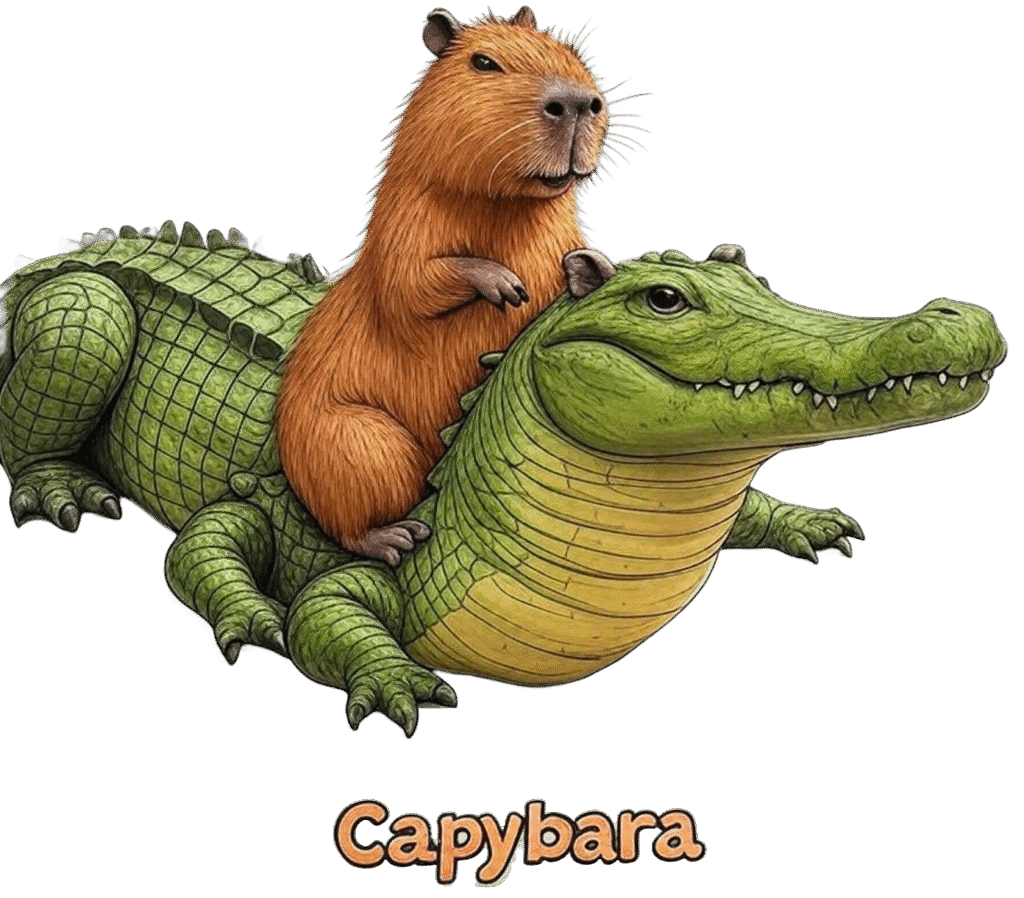
For those interested in the social dynamics of these creatures, we often discuss the importance of interspecies harmony in our posts about Why capybaras are so chill with alligators. Their size seems to give them a social gravity that attracts other animals, from birds that eat parasites off their skin to monkeys that enjoy a free ride on their broad backs.
Protecting the Fluffy Wetland Bear
As human development encroaches on the wetlands of Brazil, Paraguay, and Argentina, the large capybara faces new challenges. Habitat loss and water pollution are significant threats to their long-term survival. While they are currently listed as a species of Least Concern by the IUCN Red List, localized populations are at risk.
Raising Awareness for the capybara is not just about sharing cute photos, it is about protecting the delicate wetlands they call home. When we protect the capybara, we protect the entire ecosystem, including the countless species of birds, fish, and plants that thrive in their wake. As a Guardian of the Giant Rodent, your support for conservation efforts ensures these fluffy wetland bears will continue to roam the riverbanks for generations to come.
Final Thoughts: Respecting the Giant
The next time you see a large capybara, remember that you are looking at a living link to a prehistoric past. They are the bears of the rodent world, powerful, resilient, and surprisingly gentle. Whether they are acting as a Modern-Day Mega-Rodent in the wild or an ambassador for peace on your social media feed, they deserve our deepest respect and admiration.
At Capybara Happiness, we hope this deep dive into the fluffy wetland bear has helped you appreciate the biological complexity beneath that shaggy coat. They are truly one of nature’s most remarkable experiments in size and serenity.