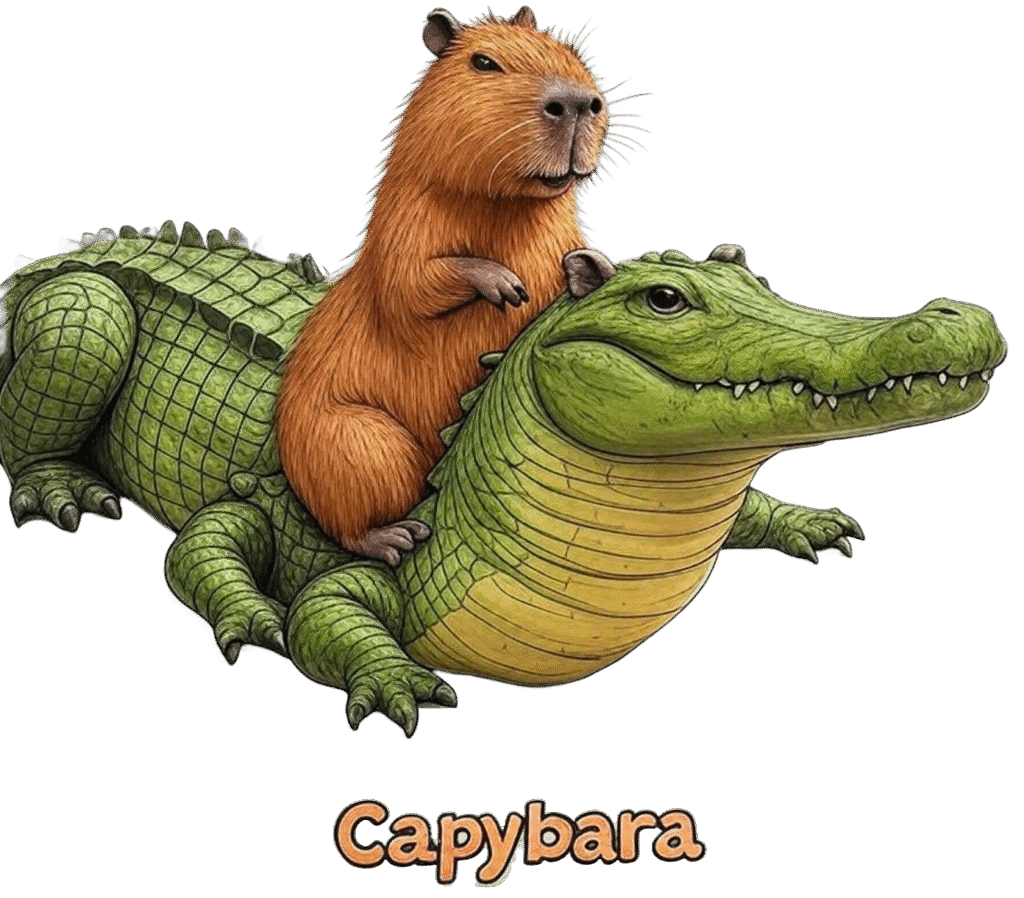
The Capybara, often revered as the Zen master of the animal kingdom, also holds a secret identity: the undisputed champion of unintentional comedy. These large, blocky rodents, with their perpetually neutral expressions and surprisingly clumsy antics, are a constant source of viral amusement. Far from being aggressive or cunning, the capybara animal’s humor is derived purely from its laid-back nature and its tendency to look utterly confused while interacting with the world.
From donning silly fruit hats to sitting serenely amidst a cacophony of birds, the funny capybaras on your screen are simply living their best lives – and we, the audience, are getting a good laugh out of it. This deep dive explores the many ways these gentle giants bring unexpected humor into our lives, cementing their status as the internet’s most wholesome comedians.
The King of Props: Capybaras and Headwear
Perhaps the most famous visual comedy routine involving the capybara is its willingness to wear almost anything on its head. From actual small hats placed by caretakers to an assortment of fruit, sticks, or even other animals, the Capybara often looks like it’s auditioning for a silent film.
This phenomenon isn’t about the capybara actively seeking a prop; it’s a testament to its supreme stillness. When a capybara animal is resting, it is resting. Its powerful commitment to remaining motionless (often a protective behavior to avoid detection by predators) allows objects to be placed or land on its flat, sturdy head without a fuss. The result is a creature of immense size wearing a tiny lemon or a perfect strawberry, an image that is intrinsically hilarious due to the sheer contrast.
It is this non-reaction, this magnificent indifference to human (or animal) antics, that elevates the humor. Capybara’s expression remains the same (a blank, slightly sleepy gaze) making it the perfect, deadpan comedic partner for its chaotic environment.
The Capybara Meme Factory: Viral Comedy
The capybara’s suitability for viral content is unmatched, leading to its widespread use in countless internet memes. Its square-shaped silhouette, paired with that iconic, unflappable expression, makes it the perfect canvas for relaying relatable human emotions – specifically, the feeling of being completely unbothered.
Memes often center on the capybara’s legendary sociability. The classic image of a capybara calmly sitting in a hot tub surrounded by dozens of onsen (hot spring) companion ducks or monkeys, often captioned with phrases like “Me and the crew,” captures a simple, universal desire for peaceful togetherness [Source: Capybaras’ Internet Popularity Explained]. The humor comes from the rodent’s ability to turn chaotic social situations into scenes of absolute harmony.
Furthermore, the “Ok I pull up” meme (derived from a popular song and usually featuring a capybara casually approaching a situation) perfectly encapsulates their bold, yet gentle, confidence. They don’t run; they simply arrive, instantly becoming the coolest creature in the room.
The Art of the Awkward Nap
Capybaras spend a significant portion of their day resting, often near or in the water. While this is natural and necessary behavior for digestion and thermoregulation, the places and postures they adopt for sleep are often unintentionally hilarious.
You might find a funny capybara sleeping on its side, looking suspiciously like a discarded sausage, or balanced precariously on a rock barely large enough for its frame. Because of their semi-aquatic nature, they are also prone to falling asleep submerged in shallow water, with just their eyes, ears, and nostrils above the surface. This habit can make them look like a floating coconut or a slightly worried periscope, giving the impression that they are either extremely lazy or practicing some elaborate form of water yoga.
Their babies, known as “capy-pups,” add another layer to this comedic behavior. Capy-pups are precocial, meaning they are active almost immediately, but they are often seen attempting to nap in crowded piles, sometimes slipping off their mothers or siblings in a display of adorable, tiny clumsiness.
Interspecies Hijinks: The Friendliest Animal
The capybara’s moniker as “Nature’s Ottoman” or the “world’s friendliest animal” is a constant source of delightful and funny capybara moments. Their non-aggressive, non-territorial nature allows them to form unlikely bonds with animals that would typically be enemies in the wild.
The sight of a cat confidently using a capybara animal as a resting pillow, or a turtle sitting atop its head, is a genuinely funny subversion of natural order. These interactions are often documented in zoos and wildlife parks, where the Capybara’s unflinching tolerance turns what should be a dangerous encounter into a peaceful, if slightly bizarre, cohabitation. This ability to make friends with every animal is not just cute; it’s an ecological anomaly that highlights their unique, easy-going temperament [Source: The Role of Capybaras in Ecosystems].
Even when encountering dangerous predators like the caiman, a capybara’s primary defense is often just stillness and a retreat to the water, where they are incredibly agile. Their reaction is typically one of calm avoidance, rather than frantic panic, which ironically makes their near-misses seem less terrifying and more like an inconvenience they’ve simply chosen to ignore.
The Peculiarities of a Capybara Pet
While the capybara animal is a wild creature, some are kept as capybara pets in regions where it is legal. Owning a giant, highly social, semi-aquatic rodent often leads to hilarious domestic situations, as documented by pet owners online.
The reality of keeping a capybara as a pet involves understanding their need for water and companionship. Videos often show these capybara pets attempting to fit their massive frames into small household bathtubs, or demanding cuddles with the same earnest, slightly goofy expression they wear in the wild. Their low, rumbling vocalizations (a form of communication often described as purring or clicking) add to their eccentric charm when they are interacting with their human caregivers.
However, owning a capybara is a massive commitment, requiring ample space, a dedicated water source, and daily social interaction. Their high maintenance requirements underscore that their cuteness is best enjoyed from afar or in carefully managed environments. Nonetheless, the domestic sight of a capybara navigating a living room or demanding a treat is a potent blend of the familiar and the absurdly large, guaranteeing a smile.
The capybara’s comedy isn’t about deliberate performance, it’s about their authentic, gentle existence. They are the ultimate ambassadors of peace, proving that sometimes, the funniest thing an animal can do is simply be its chill, slightly oversized self. Their universal appeal is a reminder that in a chaotic world, the ability to simply “pull up” and remain calm is the greatest joke of all.