
When you first see a capybara lounging on a riverbank, it might look like a giant, furry potato with a very serious face. However, as soon as this creature touches the water, its true nature as a master of the wetlands is revealed. Often called the Ambassador of Chill on land, it transforms into a highly efficient swimmer once submerged.
At Capybara Happiness, we are obsessed with the specialized anatomy that allows these animals to bridge the gap between land and water. This webbed-footed wonder is a marvel of evolutionary design, perfectly adapted for the marshy landscapes of South America. To truly understand the world’s largest rodent, we must look closely at the biological tools that make its semi-aquatic lifestyle possible.
The Anatomy of a Master Swimmer
The most distinctive feature of a capybara is undoubtedly its feet. Unlike many other rodents that have delicate, paw-like hands, this animal possesses four toes on its front feet and three on its back feet, all of which are joined by a thick, fleshy membrane. This webbing acts like a natural set of flippers, providing the necessary surface area to push against the water with incredible force.
This specialized footwear isn’t just for swimming, it also serves a vital purpose on land. The soft, marshy ground of the Amazon and Pantanal can be treacherous, but the spread of their webbed toes prevents them from sinking into the mud. According to San Diego Zoo Wildlife Alliance, this adaptation allows them to move with surprising grace through swampy terrain that would trap other large mammals.
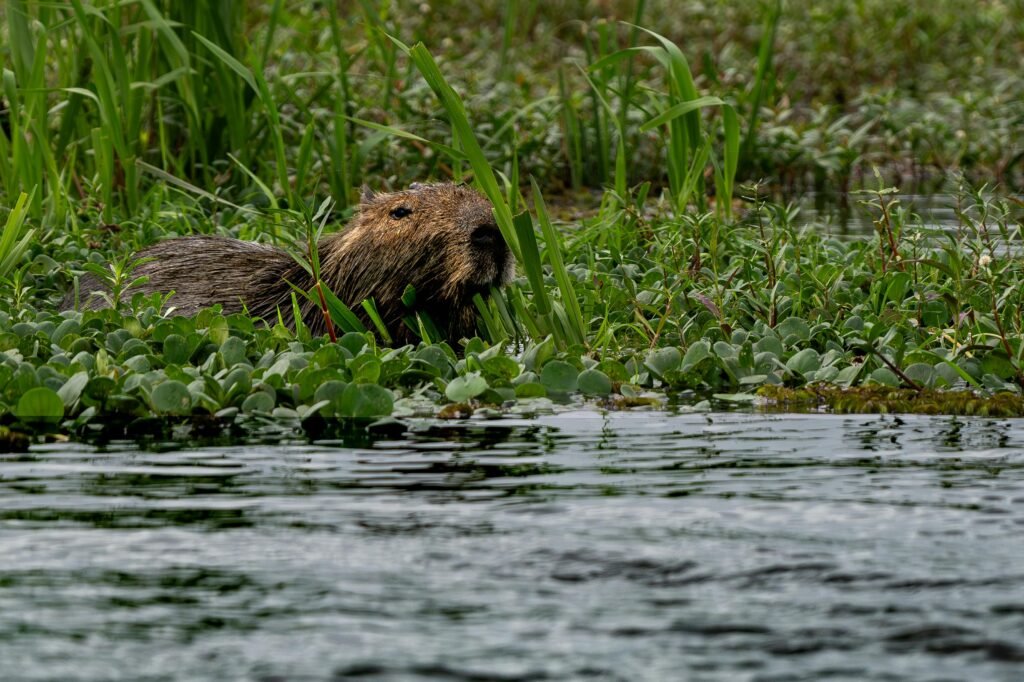
Beyond their feet, the entire body of the semi-aquatic mammal is built for submersion. Their eyes, ears, and nostrils are located high on the head, allowing them to see, hear, and breathe while the rest of their body is safely hidden beneath the surface. This periscope arrangement is strikingly similar to that of a hippopotamus or a crocodile, proving that nature often settles on the same brilliant solutions for water-dwelling species.
The Water Pig at Home: Life in the Liquid Realm
The scientific name for this creature, Hydrochoerus hydrochaeris, literally translates to Water Hog. It is a fitting title for the Water Pig, which spends roughly half of its life in or near the water. For these animals, the river is more than just a place to drink, it is a sanctuary, a nursery, and even a bathroom.
Because they are so buoyant, they can sleep in the water with only their noses exposed to the air. This buoyancy is aided by their thick, barrel-shaped bodies and a layer of fatty tissue that provides insulation. As noted by National Geographic, they are capable of staying underwater for up to five minutes at a time to hide from predators like jaguars or eagles.
At Capybara Happiness, we frequently discuss the importance of water access for their mental and physical well-being. Without a pond or river, a capybara would struggle to regulate its body temperature and maintain the health of its skin. This is a core reason why we emphasize the high cost of a capybara in a domestic setting, a bathtub simply isn’t enough for a creature designed for the vast South American basins.
A Social Butterfly of the Wetlands
While their physical adaptations are impressive, their social behavior in the water is equally fascinating. A social butterfly of the wetlands rarely swims alone. They are highly gregarious and use the water as a communal gathering spot. During the heat of the day, you will often see entire herds (sometimes up to 40 individuals) huddling together in the shallows.
In the water, their communication shifts. They use a series of low-frequency purrs and clicks to keep the group together in murky rivers where visibility might be low. Young pups are often seen hitching a ride on the backs of their mothers or other adults in the herd, safely navigating the currents while tucked into the thick, water-resistant fur of their elders.
This social structure is reinforced by their grooming habits. Water serves as a natural medium for social bonding, as they often engage in mutual grooming while cooling off. This behavior is a key component of the love for capybara felt by enthusiasts. It is hard not to be moved by the sight of a massive rodent gently cleaning a companion in the middle of a sun-drenched lagoon.
Defensive Diving: Outsmarting Predators
The webbed feet of the world’s largest rodents aren’t just for leisurely paddles, they are essential survival gear. When a predator approaches on land, the capybara’s first instinct is to sprint toward the nearest body of water. Once they hit the surface, they don’t just swim, they dive.
Their speed in the water is remarkable. They can outmaneuver many land-based predators once they reach the depths. By using their powerful back legs and webbed feet to propel themselves, they can travel considerable distances submerged, resurfacing in a completely different location to confuse an attacker.
Interestingly, their fur is not waterproof in the way a duck’s feathers are, but it is thin and coarse. This allows it to dry very quickly once they return to land. This adaptation prevents them from becoming bogged down by heavy, water-logged fur, allowing them to remain agile both in and out of the river.
The Environmental Importance of the Webbed Wonder
As a keystone species, the semi-aquatic mammal plays a critical role in the health of its environment. By grazing on aquatic plants and grasses, they help manage the growth of vegetation that might otherwise choke up waterways. Their movement through the mud and reeds also creates channels that smaller fish and amphibians use to navigate.
According to the World Wildlife Fund, protecting the habitats where these webbed-footed wonders thrive is essential for the overall biodiversity of the Amazon and Pantanal regions. When we support the conservation of a capybara, we are also protecting the countless other species that rely on the same rivers and wetlands.
Advocacy is a major part of our mission. We believe that by educating people on the specialized biology of these animals, we can foster a deeper respect for their wildness. They are not just cute icons for social media, they are sophisticated biological machines that have spent millions of years perfecting their life in the water.
Final Thoughts: Respecting the Webbed Foot
The next time you see a video of a capybara sitting peacefully in a pond, take a moment to appreciate the webbed-footed wonder beneath the surface. From their periscope-style heads to the fleshy membranes between their toes, every part of their body is a testament to the power of adaptation.
Whether they are acting as the Water Pig of the river or a social butterfly of the wetlands, these animals continue to surprise and delight us with their unique approach to life. They remind us that there is a quiet strength in being chill, and that sometimes, the best way to handle life’s challenges is to just dive right in.