
When you hear the word “rodent,” your mind probably conjures up images of mice, rats, or squirrels, small, scurrying creatures that are a familiar part of our lives. But there is a member of this family that defies all expectations of size and scale: the capybara. As the world’s largest rodent, this gentle giant is an animal of immense proportions, and its size is a defining feature that influences every aspect of its life.
In this blog post, we’ll explore what makes the capybara animal so grand. We’ll dive into the capybara facts behind their impressive dimensions, from their physical anatomy to the role their size plays in their survival, diet, and unique lifestyle.
Size and Scale: A Rodent of Grand Proportions
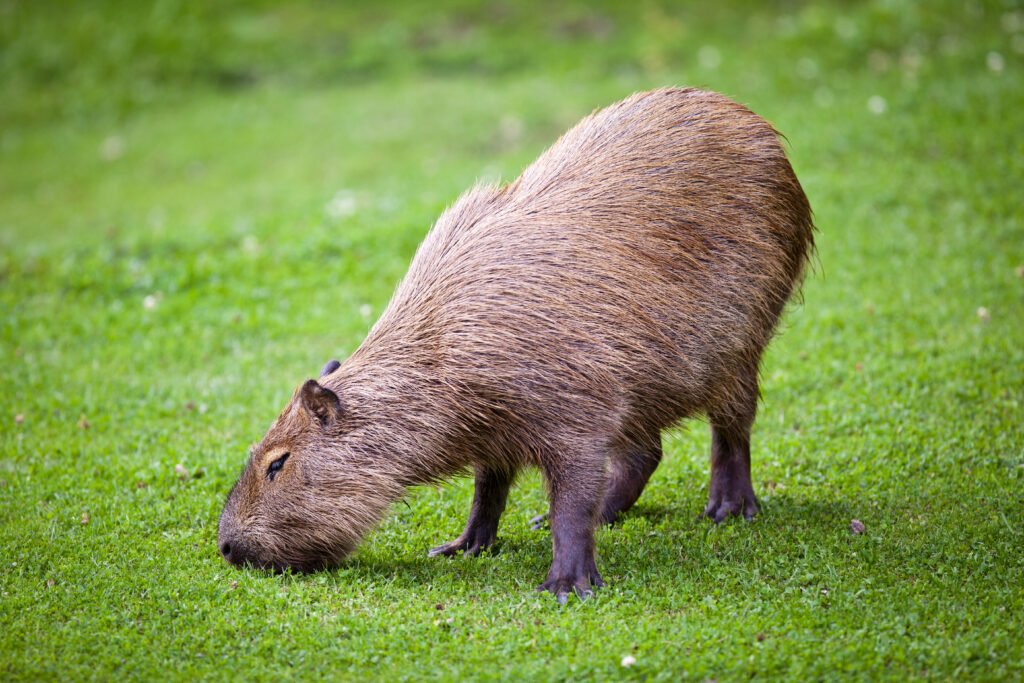
The numbers alone are enough to make you do a double-take. A fully grown capybara can weigh between 77 to 145 pounds (35-66 kg), with some individuals reaching an astonishing 174 pounds. To put that in perspective, a large capybara can weigh as much as an adult human! They can stand up to 24 inches tall at the shoulder and measure up to 4 feet in length.
This massive scale is what truly sets them apart from their rodent relatives. They are not just a bigger version of a guinea pig (though they are closely related); they are an entirely different class of creature, one that has evolved to thrive on a grand scale in the wetlands of South America.
The Biology of a Giant Rodent
Being the world’s largest rodent comes with a unique set of biological features. The capybara’s size dictates its needs for a vast capybara habitat and a specialized diet. Their barrel-shaped bodies and stout legs are built to support their heavy weight, and their coarse fur protects their skin from the elements.
This impressive size also plays a role in their social dynamics. As we’ve discussed in other posts, they are highly social animals that live in herds. Their sheer size, combined with the strength of their group, provides a powerful defense against predators like jaguars and anacondas. A large group of capybaras is a formidable sight, and their size makes them less appealing prey than smaller creatures.
A Big Animal, a Big Appetite
With a body of that size, a capybara needs to eat, and it eats a lot. As herbivores, their diet consists mainly of grasses and aquatic plants. They spend a significant portion of their day grazing to fuel their massive bodies. This constant grazing also serves another critical function: dental health.
Like all rodents, a capybara’s teeth never stop growing. Their constant grinding on tough, fibrous plant material is essential to wear down their incisors and molars, preventing painful dental problems. The sheer volume of food they consume each day is a direct consequence of their size and a necessary part of maintaining their health.
A fascinating capybara fun fact is their ability to perform coprophagy, or eating their own feces. This behavior, while unusual to us, is a brilliant digestive strategy that allows them to extract maximum nutrients from their high-fiber diet, fueling their large bodies with the energy they need.
A Giant in the Water
The capybara’s size also influences its semi-aquatic lifestyle. Their body is perfectly suited for life in the water, which serves as both a refuge and a home. Their massive bodies allow them to easily float and maneuver, and their partially webbed feet provide powerful propulsion.
When a predator threatens the herd, the capybara’s speed is used for a short, powerful dash to the water. Once they are safely in the water, their size and unique anatomy make them incredibly difficult to catch. They can hold their breath for minutes at a time and remain mostly submerged, with only their high-set eyes and nostrils peeking out, watching for danger. The serene image of a capybara in water is a powerful testament to how their size and biology work in harmony.
From Wild Giant to Pop Culture Icon
The capybara’s size is a huge part of its global appeal. People are fascinated by the idea of a rodent that is so large yet so gentle. This has led to the rise of the capybara cute image, and it’s a major reason why the capybara meme is so popular.
This fascination has also led many to wonder about keeping a capybara as a pet. While their gentle nature is appealing, their size and demanding needs make them unsuitable for most homes. Their large body requires a massive capybara habitat with a big pool, and their social nature means they need to be kept in groups.
The capybara is an incredible creature whose size is a constant source of wonder. It’s a testament to the fact that in the animal kingdom, bigger doesn’t always mean scarier. It is a peaceful, gentle giant, and its grand scale is a key part of what makes the capybara animal so beloved and so unique.