
If you have spent any time in the wholesome corners of the internet, you have likely seen the footage, a domestic house cat kneading the back of a giant, unmoving capybara, or a kitten curled up in the thick fur of the world’s largest rodent. This feline and giant rodent duo has become a staple of viral animal content, sparking curiosity and joy across the globe. At Capybara Happiness, we are committed to looking beyond the cute factor to understand the biological and behavioral drivers of these interactions.
The unlikely animal friendships we see today are more than just coincidences, they are a fascinating display of interspecies communication and shared environmental preferences. While cats are known for their predatory instincts and capybaras for their stoic demeanor, these two species often find a common ground that is surprisingly harmonious. Let’s explore the scientific and sensory reasons why cats seem to have a special affinity for their giant rodent cousins.
The Magnetism of the Living Heater
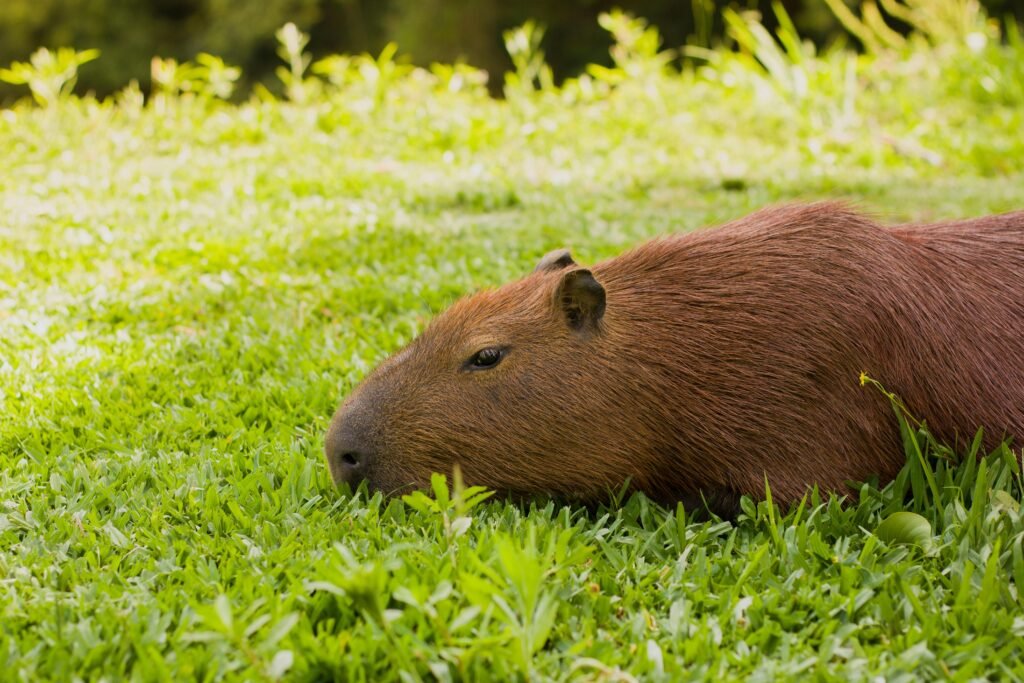
The most immediate reason for the cat and capybara attraction is purely thermodynamic. Capybaras are large, heavy mammals with a significant amount of body mass. This mass, combined with their warm-blooded nature, makes them a walking, breathing radiator.
As any cat owner knows, felines are biologically programmed to seek out warmth to maintain their high body temperature with minimal effort. Because capybaras are often stationary for hours while sunbathing or resting, they become the perfect living furniture for a cat. When a cat sits on a capybara, it is often simply engaging in its favorite hobby, being a shared sunlight seeker.
Furthermore, the coarse, wiry fur of a capybara provides a unique tactile experience for a cat. The texture is ideal for kneading (also known as making biscuits), a behavior cats use to express comfort and security. For a cat, the capybara isn’t just a friend, it is a giant, warm, vibrating pillow that doesn’t mind a little massage.
Socialization and the Absence of Threat
One might expect a cat to be wary of a 140-pound animal, or a rodent to be terrified of a predator like a feline. However, capybara and feline socialization is possible because both animals are experts at reading body language. Capybaras are notoriously non-aggressive herbivores, and cats are intelligent enough to recognize that a capybara lacks the predatory gaze of a threat.
According to research on animal behavior and social intelligence, capybaras have an incredibly high threshold for physical contact. They are social herd animals that are used to being bumped, leaned on, and groomed by their own kind. This means that when a cat jumps on their back or rubs against their legs, the capybara’s instinctual response is not to flee, but to simply accept the contact as part of the social environment.
On the other side of the equation, the cat perceives the capybara’s stillness as a sign of safety. Cats are notoriously territorial and cautious, but the zen energy of a capybara, which we have discussed in our love for capybara features, creates a low-stress zone. This mutual lack of aggression is the foundation of their bond.
Shared Grooming Habits: The Language of Licks
A fascinating aspect of the feline and giant rodent duo is their shared interest in hygiene. Both cats and capybaras are meticulous about their coats. In the wild, capybaras engage in allogrooming, where members of the group clean each other to strengthen social bonds and remove parasites.
When a cat begins to lick a capybara, it is speaking a universal language of affection and social acceptance. The capybara, recognizing this as a grooming behavior similar to what it experiences in its own herd, will often lean into the cat or even flip over to expose its belly. This is a profound sign of trust in the animal kingdom.
As noted by Animal Club UK, the capybara’s skin also secretes oils that may have a scent that is intriguing or even pleasant to a cat. While we might not see the appeal, for a feline with a highly developed sense of smell, the capybara is a walking sensory experience.
Sensory Similarities and Silent Communication
While they come from different continents and evolutionary branches, cats and capybaras share some surprising sensory traits. Both animals are highly sensitive to vibrations and sound. The low-frequency purr of a happy cat may actually have a calming effect on the capybara, echoing the low clicks and purrs they use to communicate within their own families.
Moreover, both species value their quiet time. Neither is particularly fond of chaotic, loud environments. This shared preference for a peaceful lifestyle makes them ideal roommates. A cat doesn’t bark or jump around like a dog might, which suits the capybara’s preference for a calm atmosphere. This silent understanding is a key reason why unlikely animal friendships involving these two species are so successful.
The Human Impact: Why We Love the Capy-Cat
The popularity of the cat capybara connection also says a lot about human psychology. When we see a small, agile predator like a cat befriending a large, vulnerable-looking rodent, it challenges our preconceptions about natural enemies. It provides a heartwarming example of peaceful coexistence, which is a core pillar of our mission here at Capybara Happiness.
Research on the impact of cute animal videos suggests that witnessing these harmonious interactions can significantly reduce human stress levels. We see in them a world where differences in size, species, and job description don’t prevent two individuals from finding comfort in each other’s presence.
Important Safety Note for Enthusiasts
While the images of cats and capybaras are delightful, it is important to remember that these interactions should only occur in controlled, supervised environments. Capybaras are massive animals, and an accidental step could easily injure a small cat. Conversely, a startled cat could scratch a capybara, leading to infections.
If you are visiting a sanctuary or a zoo that houses both, always follow the guidelines provided by the staff. Respecting the animals’ boundaries is the best way to show your love for them. At Capybara Happiness, we advocate for the well-being of the animal first, ensuring that their happiness is never sacrificed for a photo opportunity.
Final Thoughts on the Purr-fect Pair
The bond between cats and capybaras is a beautiful mystery of the natural world. It is a mixture of heat-seeking, social grooming, and a shared desire for a life of zen. Whether they are napping in the sun or sharing a quiet moment in a garden, the feline and giant rodent duo reminds us that friendship doesn’t always have to make sense, it just has to feel right.The next time you see a cat and a capybara together, you’ll know that it isn’t just magic, it’s a clever combination of biological needs and a mutual appreciation for the chill side of life. Stay tuned to Capybara Happiness as we continue to explore the incredible ways these animals interact with the world around them!