
When people think of the world’s most beloved aquatic rodent, they usually picture a relaxed, dog-sized creature lounging peacefully in a sunny stream. What many animal lovers do not realize is that the genus Hydrochoerus actually contains two distinct living species. The famous giant we see dominating viral social media clips is the greater capybara, but its lesser-known sibling, the lesser capybara, is equally fascinating.
Understanding the differences between these two species reveals how evolutionary adaptions shaped them to thrive in different geographic pockets of Central and South America. Whether you are a wildlife enthusiast or simply curious about these gentle animals, exploring the Greater vs. lesser capybara dynamic offers a deep dive into the diversity of the cavy family.
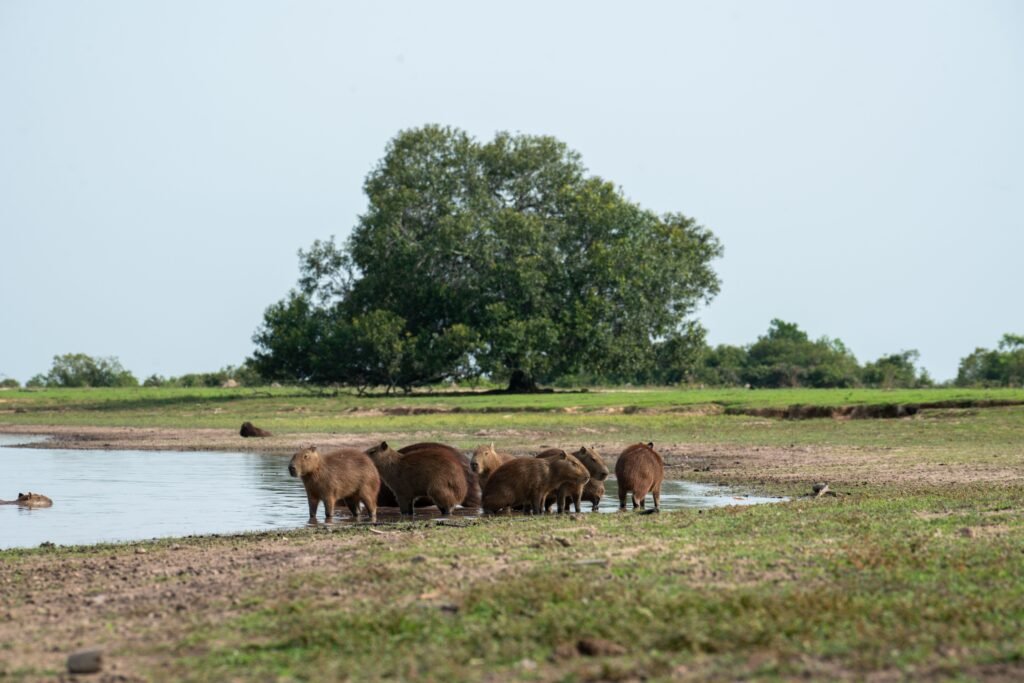
Tale of the Tape: Size and Physical Differences
The most obvious distinction between these two cousins comes down to sheer scale. The greater capybara species (Hydrochoerus hydrochaeris) holds the undisputed title of the largest living rodent on planet Earth. Fully grown adults of this oversized rodent species regularly reach lengths of up to 4.3 feet (1.3 meters) and weigh between 77 and 174 pounds (35 to 79 kilograms).
In contrast, the lesser capybara (Hydrochoerus isthmius) lives up to its name by being significantly smaller. An adult lesser capybara typically measures around 3 feet (0.9 to 1 meter) in length and weighs between 44 and 62 pounds (20 to 28 kilograms). That makes the common capybara nearly double the weight of its northwestern relative!
Beyond body mass, there are subtle visual markers that keen observers can spot. The lesser capybara often sports a slightly darker brown coat compared to the reddish-tan fur of its larger counterpart. Zoologists examining skulls also point to distinct differences in the pterygoid processes and frontal bones between the two species. However, to the casual onlooker, the lesser capybara simply looks like a permanent juvenile version of the greater species.
Geographic Distribution and Habitat Preferences
Where you travel in the Americas determines which species of semi-aquatic herbivore you will encounter in the wild. The common capybara occupies a massive geographic range across South America east of the Andes Mountains. You can find healthy populations spread throughout Venezuela, Brazil, Colombia, Ecuador, Peru, Bolivia, Paraguay, Uruguay, and northern Argentina.
The lesser capybara has a much more restricted territory. It inhabits the tropical regions of central Panama, northwestern Colombia, and far northwestern Venezuela. The Andes mountain range acts as a natural geographical barrier that keeps these two populations completely isolated from one another. You can learn more about how geographic boundaries shape wildlife distribution through the Encyclopedia Britannica Capybara Overview.
Despite living in different regions, both species share an identical love for water. They inhabit lush riverbanks, marshy savannas, flooded grasslands, and lake borders. Water provides them with a safe haven from natural predators like jaguars, caimans, and anacondas. Being expert swimmers with partially webbed feet, both species rely heavily on deep aquatic environments to regulate their body temperature and hydrate their skin.
Social Structures, Herds, and Behavior
Both capybara species are remarkably social creatures, but their group dynamics reflect the size of their habitats. The greater capybara routinely gathers in large herds that average 10 to 20 individuals, though groups can swell to over 100 during dry seasons when water sources become scarce. These large family groups establish clear hierarchies led by a dominant male.
Lesser capybaras also live in social herds, but their groups are generally smaller and more tight-knit. A typical lesser capybara herd usually consists of 10 to 15 members, often featuring one dominant male, several adult females, and their offspring. Subordinate males in both species often act as sentinels on the perimeter, barking to warn the group of approaching danger.
Communication style across both species relies on a complex language of vocalizations. They express feelings through whistles, purrs, grunts, clicks, and high-pitched alarm barks. Interestingly, lesser capybaras tend to be somewhat more shy and nocturnal in areas with heavy human activity compared to greater capybaras.
Dietary Habits and Digestion
When it comes to culinary tastes, both animals share nearly identical palates. As dedicated herbivores, they consume a diet consisting almost entirely of native grasses, aquatic vegetation, reed shoots, fruit, and soft tree bark. In agricultural regions, both species have gained a reputation for sneaking into farm fields to feast on crops like sugarcane, melons, and squash.
Because grass is difficult to digest, both capybara species possess specialized digestive systems. They practice coprophagy, meaning they eat their own morning feces to re-ingest undigested plant proteins and helpful gut bacteria. Their large front incisors grow continuously throughout their lives, requiring constant grinding on tough plant fiber to keep them manageable.
Proper nutrition plays a fundamental role in maintaining their health in wild and captive environments alike. To explore detailed dietary requirements, you can compare their feeding habits to other cavies by reading the Wikipedia Lesser Capybara Profile.
Conservation Status and Threat Profiles
From a global conservation standpoint, both species are currently classified as species of Least Concern by environmental organizations. You can review their official extinction risk assessments directly on the IUCN Red List. However, Least Concern does not mean that localized populations are completely out of the woods.
The lesser capybara faces increasing habitat fragmentation due to deforestation, agricultural expansion, and human development in Panama and northwestern Colombia. Because its natural range is much smaller than that of the greater capybara, localized habitat destruction impacts lesser capybara numbers more severely. Hunting for meat and hides also remains a concern in certain rural communities where subsistence hunting is common.
The greater capybara species enjoys a massive population base across the Amazon river basin, helping buffer it against regional threats. In countries like Venezuela and Colombia, sustainable ranching initiatives for the greater capybara have actually helped reduce illegal poaching in wild reserves. Both species remain protected under national wildlife laws across most of their home territories.
Key Differences Summary: Greater vs. Lesser Capybara
To easily digest the differences between these two iconic rodents, consider the primary points of contrast:
- Scientific Name: Hydrochoerus hydrochaeris (Greater) vs. Hydrochoerus isthmius (Lesser).
- Average Weight: 77–174 lbs for the greater vs. 44–62 lbs for the lesser.
- Geographic Range: Most of South America east of the Andes (Greater) vs. Panama, Colombia, and Venezuela (Lesser).
- Coat Shade: Lighter reddish-brown (Greater) vs. darker brown tones (Lesser).
- Herd Sizes: Up to 100 in dry seasons (Greater) vs. typically 10–20 members (Lesser).
Final Thoughts on These Remarkable Cavies
While the greater capybara commands global fame as the heavyweight champion of the rodent world, the lesser capybara is an equally fascinating species that thrives in its tropical niche. Both animals highlight the incredible adaptability of the cavy family across the diverse ecosystems of the Americas. By learning to appreciate the distinct qualities of both species, wildlife lovers can better understand and advocate for the preservation of these gentle aquatic icons.
Join the Herd at Capybara Happiness!
Want to dive deeper into the peaceful world of capybaras? Whether you are looking for in-depth care guides, habitat setup tips, or simply want to stay updated on these amazing giant rodents, we have got you covered. Head over to the Capybara Happiness Website to explore our full library of expert articles, dietary advice, and heartwarming capybara content designed to keep you (and your favorite semi-aquatic friends) smiling every day!