
When most people picture a capybara, they imagine the massive, barrel-shaped rodent that has taken internet pop culture by storm. However, many wildlife enthusiasts are surprised to learn that there is not just one type of capybara in the wild. Nature actually boasts two distinct living species, the widely famous greater capybara and the distinctly small capybara species known as the lesser capybara.
While these two semi-aquatic cavies share a remarkably similar appearance, lifestyle, and peaceful temperament, they differ significantly in geographical distribution, genetics, skull morphology, and body size. If you have ever wondered how big does a small capybara get compared to its giant relative, this comprehensive guide covers every key difference between the standard greater capybara and its lesser counterpart!
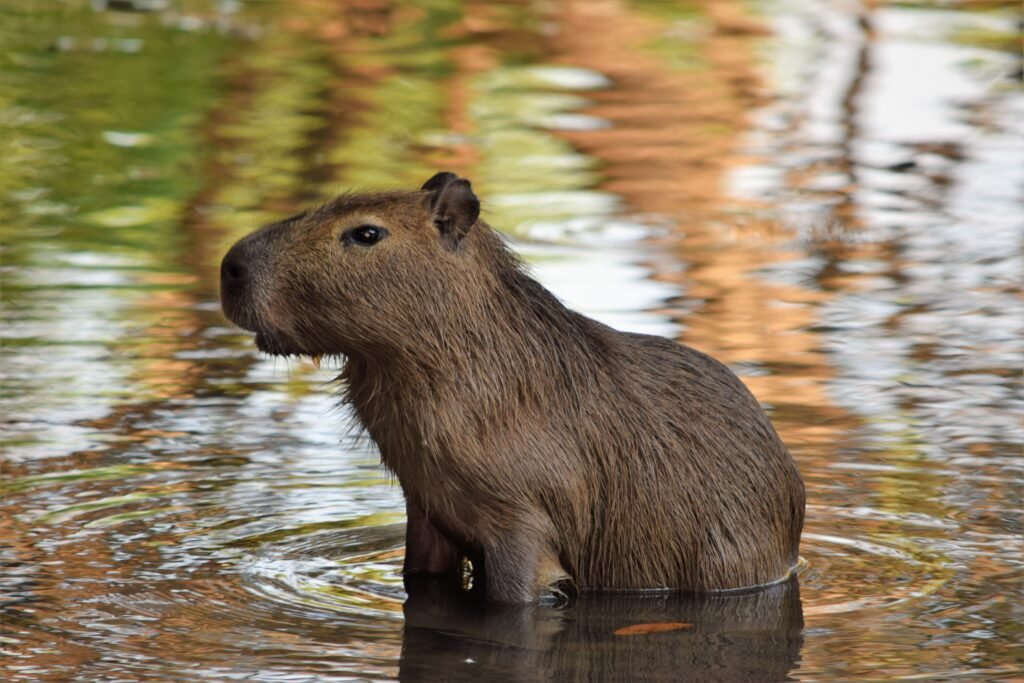
Taxonomy and Genetic Classification
To understand the physical variations between these giant rodents, we must first look at their scientific taxonomy. Both species belong to the family Caviidae and the genus Hydrochoerus, making them close biological relatives to domestic guinea pigs and cavies.
For many years, taxonomists classified the lesser capybara (Hydrochoerus isthmius) as merely a smaller subspecies of the standard greater capybara (Hydrochoerus hydrochaeris). However, thorough genetic sequencing and morphological studies conducted in the late 20th century confirmed that the lesser capybara is indeed a genetically distinct, separate species.
The primary genetic distinction lies in their chromosomal makeup and skull structure. While both species share similar semi-aquatic evolutionary adaptations, their divergent evolutionary paths occurred as populations became geographically isolated by mountain ranges. You can explore a deeper breakdown of general species biology and taxonomy in our Capybara Happiness Care Guide.
Physical Size, Weight, and Appearance Differences
The most obvious contrast between the standard greater capybara and the small capybara species comes down to overall dimensions. Standard capybaras hold the title of the largest living rodents on Earth, whereas lesser capybaras present a much more compact silhouette.
An adult standard greater capybara typically weighs between 77 and 150 pounds (35 to 66 kg), with exceptional specimens reaching up to 170 pounds. In terms of height, they stand roughly 20 to 24 inches (50 to 62 cm) tall at the shoulder and measure up to 4.3 feet (1.3 meters) in length.
In contrast, an adult lesser capybara generally weighs between 60 and 80 pounds (27 to 36 kg). They measure around 3 feet (0.9 meters) in length and stand significantly shorter at the shoulder. Despite being a relatively bite-sized capybara compared to its giant cousin, the lesser capybara is still larger than almost every other rodent species on the planet.
| Physical Attribute | Standard Greater Capybara (H. hydrochaeris) | Small Lesser Capybara (H. isthmius) |
| Average Adult Weight | 77 to 150 lbs (35 to 66 kg) | 60 to 80 lbs (27 to 36 kg) |
| Average Length | 3.5 to 4.3 feet (100 to 130 cm) | 2.5 to 3 feet (80 to 100 cm) |
| Shoulder Height | 20 to 24 inches (50 to 62 cm) | 16 to 18 inches (40 to 45 cm) |
| Primary Region | East of the Andes (Brazil, Venezuela, Argentina) | West of the Andes (Panama, Colombia, Venezuela) |
Geographical Habitat and Distribution Range
Geographical isolation played a critical role in splitting these two species into distinct evolutionary lines. The massive Andes mountain range serves as a natural geographic barrier separating their native territories in South and Central America.
Standard greater capybaras enjoy a vast geographic range across almost all of South America east of the Andes mountains. They thrive in lush river basins, seasonally flooded savannas, and tropical forests throughout Brazil, Colombia, Venezuela, Ecuador, Peru, Bolivia, Paraguay, Uruguay, and northern Argentina.
Conversely, the lesser capybara occupies a much smaller, localized habitat range. They are native to northwestern Venezuela, northern Colombia, and extend north into the tropical river valleys of eastern Panama. Panama represents the only region in Central America where wild capybaras naturally reside. Detailed species mapping and geographical surveys are maintained by the IUCN Red List Directory.
Behavioral Traits and Herd Dynamics
Despite the noticeable difference in body mass, both species exhibit remarkably similar social behaviors, dietary preferences, and semi-aquatic habits. Both species are crepuscular herbivores that spend the hottest hours of the day soaking in shallow rivers, marshes, and muddy wallows.
Socially, both species rely on close herd structures for protection against natural predators. However, because the lesser capybara inhabits regions with higher human population density and smaller river systems, their wild herds tend to be slightly smaller than the massive gatherings seen in the Venezuelan Llanos or Brazilian Pantanal.
Wild herds of lesser capybaras usually consist of 2 to 10 individuals, whereas standard capybara herds can easily swell to over 40 animals during the dry season. Both species practice alloparenting, where adult females nurse and guard all young pups within the group. To read more about how herd cooperation protects growing pups, check out our guide on Capybara Happiness Diet & Behavior Tips.
Conservation Status and Environmental Threats
Both capybara species face environmental pressures caused by human expansion, habitat fragmentation, and climate change. However, their differing population sizes and geographical distribution impact their long-term conservation outlook.
The standard greater capybara is classified as a species of Least Concern by global wildlife authorities due to its widespread distribution and robust wild populations. However, localized populations still suffer from deforestation, agricultural wetland drainage, and illegal hunting.
The lesser capybara faces higher localized risks due to its restricted range in Panama and northern Colombia. Deforestation along river corridors and agricultural pollution present ongoing challenges to their freshwater habitats. Academic research published by the Smithsonian Tropical Research Institute highlights the importance of preserving contiguous river systems to protect Central America’s unique lesser capybara populations.
Furthermore, educational outreach supported by global conservation groups like the World Wildlife Fund Capybara Directory helps raise awareness about protecting delicate Neotropical river basins for both species.
Final Thoughts on Standard and Lesser Capybaras
Whether observing a 150-pound standard greater capybara in Brazil or a smaller lesser capybara in Panama, both species showcase the fascinating adaptability of semi-aquatic mammals. While one holds the record as nature’s ultimate giant rodent, its slightly smaller cousin remains an equally impressive and vital component of Central and South American wetland ecosystems!
Join the Herd at Capybara Happiness!
Want to dive deeper into the peaceful world of capybaras? Whether you are looking for in-depth care guides, habitat setup tips, or simply want to stay updated on these amazing giant rodents, we have got you covered. Head over to the Capybara Happiness Website to explore our full library of expert articles, dietary advice, and heartwarming capybara content designed to keep you smiling every day!