
When most wildlife lovers picture a capybara, they imagine the famous, oversized rodents relaxing in the sprawling wetlands of Brazil or Venezuela. However, tucked away in the tropical waterways of Central America resides a distinct, lesser-known cousin, the Lesser capybara in Panama (Hydrochoerus isthmius).
This fascinating species marks the absolute northernmost boundary for all wild capybara populations on Earth. While sharing the same famous chill demeanor as its South American relatives, the Panamanian capybara boasts its own unique evolutionary story, physical traits, and behavior. Let us explore what makes this semi-aquatic mammal one of Central America’s best-kept wildlife secrets!
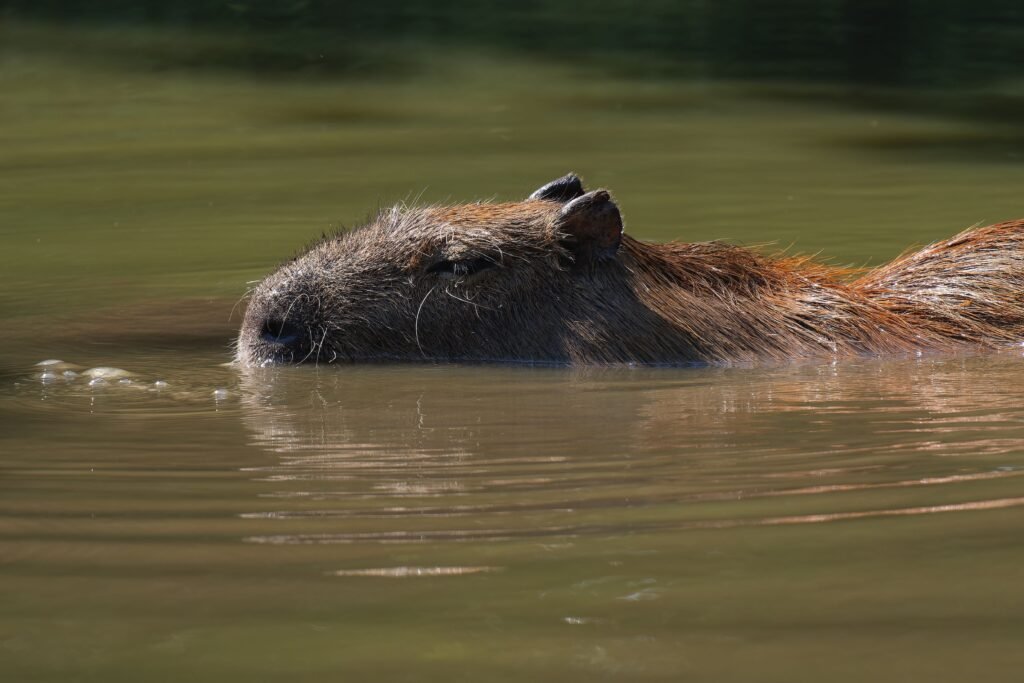
What Is the Lesser Capybara? Taxonomy and Physical Differences
For many years, scientists classified the Panamanian capybara simply as a smaller subspecies of the common capybara (Hydrochoerus hydrochaeris). However, detailed genetic research and anatomical studies in the 1980s confirmed that it is an entirely independent species.
While common capybaras can easily weigh over 100 pounds (50 kg), the Lesser capybara in Panama reaches a maximum weight of about 60 to 62 pounds (28 kg). They measure roughly 3 feet (90 cm) in length and feature a noticeably darker brown coat compared to their larger southern counterparts.
Quick Physical Comparison at a Glance
- Scientific Name: Hydrochoerus isthmius
- Average Adult Weight: 60 – 62 lbs (27 – 28 kg)
- Body Length: Up to 3 feet (90 cm)
- Primary Coat Color: Dark reddish-brown to dark brown
- Distinct Features: Slightly shorter skull, partially webbed feet, and high-set eyes and ears designed for swimming.
Despite being smaller than the common species, this animal still holds the title of the third-largest living rodent on the planet!
Exploring the Panamanian Capybara Habitat
The Panamanian capybara habitat relies entirely on constant access to fresh water. These semi-aquatic rodents thrive in lush tropical marshes, slow-moving river valleys, mangrove swamps, and forested lake borders.
Over the past century, these adaptable animals have successfully colonized key freshwater basins across Central Panama. The expansion of human-made water bodies has provided expansive, protected waterways where these semi-aquatic cavies flourish alongside rich tropical flora.
Prime Locations for Wild Capybaras in Panama
- The Chagres River Basin: The lush, forest-lined banks of the Chagres River serve as a vital stronghold for wild capybaras in Panama.
- Gatun Lake and Barro Colorado: The small islands and quiet coves around Gatun Lake offer perfect grazing grounds.
- Gamboa Ponds: Located near the Panama Canal, these freshwater marshlands are among the absolute best spots for ecotourists.
- Darién Province: The eastern, dense river valleys of Darién host some of the oldest historic populations of the Central American capybara.
Behaviors, Social Structures, and Dietary Habits
In terms of lifestyle, the Lesser capybara in Panama exhibits fascinating adaptations to its environment. They are strictly herbivorous, spending their mornings and late afternoons grazing on lush river grasses, reeds, and aquatic plants. On average, an adult can consume up to 6 to 8 pounds of vegetation every single day!
Living in a world populated by predators like jaguars, spectacled caimans, and large harpy eagles means vigilance is key. Panamanian capybara groups usually range from small family pairs up to herds of 20 individuals. When threatened, they emit sharp bark-like warning calls before leaping into deep water.
Because Panama can feature intense daytime temperatures, water serves as their ultimate refuge. Soaking in shallow pools helps them regulate their body temperature and protects their sensitive skin from sunburn.
Spotting Capybaras Near the Panama Canal: Ecotourism Tips
If you are a wildlife enthusiast planning a trip to Central America, spotting capybaras near the Panama Canal should be right at the top of your bucket list! Unlike their bolder South American relatives, Panamanian capybaras tend to be somewhat secretive and shy due to historical hunting pressure.
However, with a little patience and the right strategy, seeing these gentle creatures in the wild is an unforgettable experience.
Tips for Successful Wildlife Watching
- Timing Is Everything: Plan your excursion during early morning sunrise or late evening twilight, as these animals are predominantly crepuscular or nocturnal.
- Explore by Boat: Taking a boat tour along the Chagres River or the quiet inlets of Gatun Lake allows you to approach quietly without disturbing their natural behavior.
- Visit During the Rainy Season: Water levels rise during the wet season, bringing capybaras closer to accessible shoreline vegetation in areas like Gamboa.
To review official species distribution maps and global conservation listings, you can visit the IUCN Red List Profile for Hydrochoerus isthmius.
Conservation Status and Future Threats
Currently, global wildlife organizations classify the Lesser capybara in Panama as Data Deficient or Least Concern depending on the region. Because they lead elusive lives in dense wetlands, tracking exact population numbers across Central America remains challenging for researchers.
Despite their adaptability, these capybaras face ongoing environmental pressures. Deforestation, wetland drainage for agricultural expansion, and local subsistence hunting present continuous challenges to their long-term stability.
Protecting vital ecosystems like the Chagres National Park ensures that these unique rodents have safe river corridors for generations to come. Detailed research into Neotropical mammal ecology is supported by organizations like the Smithsonian Tropical Research Institute in Panama, which conducts ongoing field studies in the Panama Canal watershed. Additional educational details on rodent taxonomy are accessible through the Encyclopaedia Britannica Capybara Overview.
Final Thoughts on Central America’s Mini Giant
The capybaras in Panama are a remarkable testament to nature’s ability to adapt and thrive. By occupying its own distinct ecological niche in the wetlands of Central America, this smaller cavy proves that fantastic things truly do come in slightly smaller packages! Whether you encounter them on a jungle boat tour or study them from afar, Panama’s native capybara continues to capture the hearts of animal lovers worldwide.
Discover More at Capybara Happiness!
Can’t get enough of the world’s most peaceful rodents? Whether you want to explore species guides, care advice, or fun capybara trivia from around the globe, we have everything you need! Head on over to the Capybara Happiness Website today to join our community and celebrate these incredible semi-aquatic animals every single day!