
When we think about nature’s most relaxed creatures, the capybara almost always tops the list. Known across the globe for their calm demeanor and friendly expressions, these semi-aquatic mammals have captured the hearts of animal lovers everywhere. However, seeing them in viral social media videos only gives us a tiny glimpse into their fascinating reality.
Understanding a naturally occurring capybara means looking past their internet fame and stepping directly into their lush native environments. In their native wilderness, these creatures lead dynamic, social lives centered around survival, water, and strong herd bonds. Let us dive into the wild world of the largest living rodent on Earth!
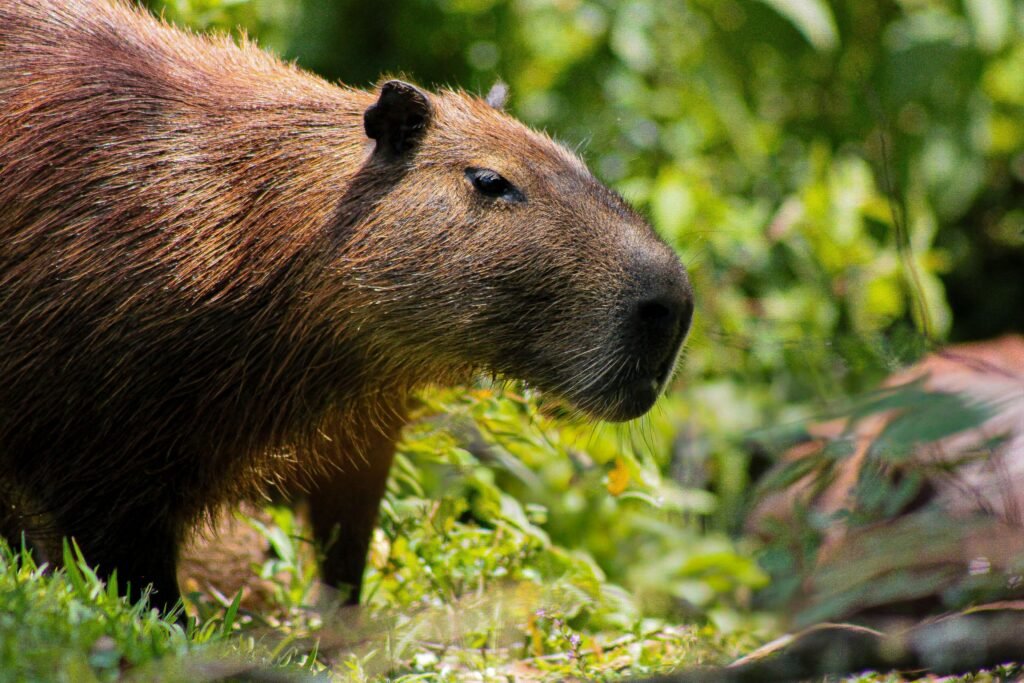
Where in the World Are Native Capybara Populations Found?
Native capybara populations inhabit almost every single country in South America, with Chile being the lone exception. They thrive in lowland habitats wherever permanent freshwater is readily available. From the vast flooded savannas of the Venezuelan Llanos to the dense river basins of the Amazon rainforest, these animals dominate wet environments.
A free-ranging capybara will never stray too far from a reliable water source. They live along riverbanks, beside quiet ponds, inside marshy swamps, and throughout flooded grasslands. To learn more about how geographic distribution maps out across ecosystems, explore the detailed species breakdown provided by the Wikipedia Capybara Entry.
Water is the absolute cornerstone of their existence, providing both environmental temperature regulation and safety. During scorching afternoon hours, these animals rely on muddy shallows and cooling currents to keep their sensitive skin hydrated. Without daily access to water, an undomesticated capybara simply cannot survive in the wild.
Physical Adaptations of the Wild Gentle Giant
Evolution has expertly crafted this wild gentle giant for a life split between land and water. A fully grown wild specimen can weigh anywhere from 77 to over 170 pounds, standing nearly two feet tall at the shoulder. Their heavy, barrel-shaped bodies are built for stability along slippery mud banks and swift river currents.
One of their most remarkable physical features is their facial structure. Their eyes, ears, and nostrils are all situated high on top of their heads. This clever arrangement allows a free-ranging capybara to swim completely submerged while keeping its sensory organs above water to watch for potential threats.
Their feet are also specially adapted for an aquatic lifestyle. Featuring webbed toes, their feet act like flippers when paddling through deep rivers or navigating soft, marshy soils. Their coarse, thin coat dries out rapidly when they step back onto dry land, preventing fungal growth in humid tropical climates.
The Semi-Aquatic Lifestyle of the Free-Ranging Capybara
For a naturally occurring capybara, water is far more than just a place to take a refreshing bath. It serves as their main sanctuary from dangerous apex predators like jaguars, harpy eagles, ocelots, and giant anacondas. When a predator approaches the herd, these animals bolt toward the nearest riverbank and dive right in.
Once underwater, they can hold their breath for up to five full minutes at a time! They can even sleep submerged in shallow water, keeping only their nostrils exposed to the open air to breathe quietly. You can read more about these aquatic survival tactics on the World Land Trust Species Overview.
When they are not dodging predators, swimming also serves a crucial social function. Herds spend hours wallowing together in cooling mud, which protects their skin from sunburn and annoying biting insects.
Herd Life and Social Dynamics in the Wild
In their natural habitats, capybaras are deeply gregarious creatures that rely on safety in numbers. An undomesticated capybara rarely lives alone, instead, it belongs to a cohesive herd typically ranging from 10 to 20 individuals. During the dry season, multiple groups often converge around shrinking water holes, forming super-herds of up to 100 members.
A standard wild group includes a dominant male, several adult females, subordinate males, and juveniles. Communication within the herd is remarkably vocal and expressive. They use a complex repertoire of dog-like barks, high-pitched whistles, purrs, huffs, and clicks to coordinate movement and signal alarm.
Mother capybaras share parental duties in a cooperative nursery system. All nursing females in a group help feed and groom the young pups, regardless of who birthed them! To explore more about how wild herds interact and build social bonds, visit San Diego Zoo Wildlife Explorers.
What Does an Undomesticated Capybara Eat?
As strict herbivores, native capybara populations survive on a plant-based diet consisting of grasses and aquatic vegetation. They are surprisingly picky eaters, often selecting specific grass species while ignoring others nearby. During the wet season, fresh grasses make up the bulk of their daily calorie intake.
When the dry season arrives and green pasture grass becomes scarce, their feeding habits adapt. They switch to eating sturdy reeds, tree bark, fallen fruit, and whatever river plants remain. Like all rodents, their front incisors grow continuously, requiring constant chewing to keep them worn down.
To extract maximum nutritional value from tough plant fibers, they rely on a unique digestive mechanism. They practice coprophagy, consuming their own nutrient-rich morning droppings to re-digest proteins and beneficial gut bacteria.
Conservation Status and Ecological Importance
Despite facing habitat disruption and hunting pressure in certain rural regions, the wild capybara remains listed as Least Concern by the global scientific community. You can review their full ecological status and threat profile on the IUCN Red List. Their large population numbers across the South American continent help buffer them against major extinction risks.
These animals play a vital role in maintaining their native wetland ecosystems. By grazing down dense grasses and aquatic weeds, they create open water channels that benefit fish, wading birds, and amphibians. They also serve as a crucial food source for top predators, holding the local food chain together.
Protecting South American wetlands is key to ensuring that future generations of these gentle giants continue to roam freely. Preserving river systems, tropical marshes, and gallery forests keeps wild ecosystems healthy, thriving, and balanced for all native wildlife.
Final Thoughts on Wild Capybaras
Appreciating a naturally occurring capybara means honoring its true identity as a wild, semi-aquatic South American mammal. From their webbed feet to their vocal herd communication, every aspect of their biology is fine-tuned for a peaceful existence along tropical riverbanks. By supporting habitat conservation, we ensure that these remarkable animals can continue to swim, graze, and snooze in the wild for generations to come.
Join the Herd at Capybara Happiness!
Want to dive deeper into the peaceful world of capybaras? Whether you are looking for in-depth care guides, habitat setup tips, or simply want to stay updated on these amazing giant rodents, we have got you covered. Head over to the Capybara Happiness Website to explore our full library of expert articles, dietary advice, and heartwarming capybara content designed to keep you (and your favorite semi-aquatic friends) smiling every day!