
If you have spent even a few minutes on social media over the last year, you have likely encountered a peculiar, barrel-shaped creature lounging in a Japanese hot spring or stoically allowing a duck to sit on its head. This is the capybara, the world’s largest rodent and the internet’s undisputed Ambassador of Chill. The global love for capybara has evolved from a simple meme into a full-blown cultural phenomenon that transcends borders and languages.
At Capybara Happiness, we see this surge in popularity as more than just a passing trend. Whether you are a long-time Capybara Enthusiast or a newly minted Member of the Herd, there is something deeply resonant about these animals. But what exactly is it about this 140-pound rodent that triggers such a profound emotional response in humans? The answer lies in a fascinating intersection of evolutionary biology, social psychology, and our modern need for tranquility.
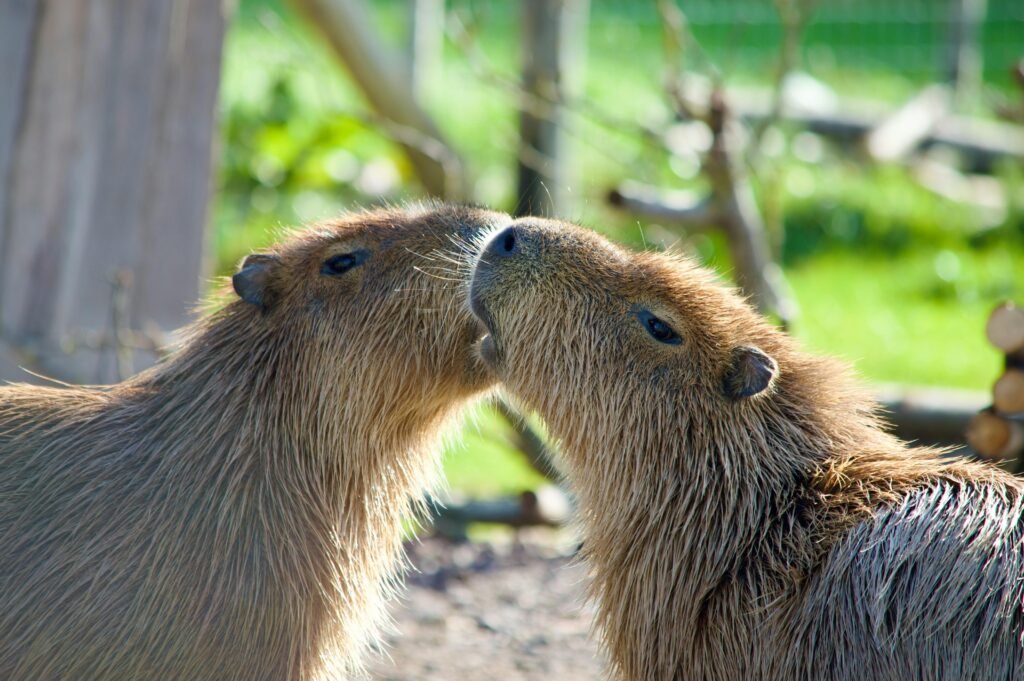
The Psychology of the “Chill”: Why We Seek Their Serenity
In a world that often feels chaotic and fast-paced, the capybara offers a visual and emotional balm. Psychologists suggest that our attraction to these animals is rooted in their low-arousal positive affect. According to research highlighted by Oreate AI, capybaras exude a sense of neutral contentment that humans find incredibly soothing during times of high stress or global unrest.
They represent an aspirational state of being, unbothered, present, and entirely at peace with their surroundings. Unlike more high-energy pets that demand constant interaction, a capybara simply exists. This zen energy is contagious, studies have shown that watching videos of calm, cute animals can lower blood pressure and reduce anxiety by up to 50%, as noted in a University of Leeds study.
The Nature’s Ottoman Effect: A Lesson in Interspecies Harmony
Perhaps the most lovable trait of the capybara is its seemingly magical ability to befriend almost any other creature. From monkeys grooming their fur to turtles sunbathing by their side, the capybara is the ultimate social butterfly of the animal kingdom. This has earned them the affectionate nickname Nature’s Ottoman.
Biologically, this interspecies friendship is driven by their gentle, non-aggressive temperament and their social herd instincts. They are herbivores that pose zero threat to others, and their large, warm bodies often serve as a comfortable resting place for smaller species.
For the Capy-Connoisseur, these interactions are a powerful reminder of the power of peaceful coexistence that we champion on Capybara Happiness. They prove that harmony is possible even between the most unlikely neighbors.
From Viral Memes to Real-World Advocacy
While we all enjoy a good Capybara in a Bathtub video, the true Guardian of the Giant Rodent knows that there is much more to these animals than their internet fame. The capybara is a keystone species in the South American wetlands, playing a vital role in maintaining the health of ecosystems like the Pantanal and the Amazon Basin.
As a Member of the Herd, it is important to understand the biological wonders that make them so unique:
- Semi-Aquatic Adaptations: Their eyes, ears, and nostrils are positioned on top of their heads, allowing them to remain submerged while staying alert, a trait shared with hippos.
- Constant Growth: Like all rodents, their teeth never stop growing, requiring a capybara diet rich in tough grasses to keep them filed down.
- Vocal Complexity: They aren’t just silent observers, they communicate through a South American symphony of clicks, whistles, barks, and even purrs.
According to the Natural History Museum, their ability to thrive in social groups of 10 to 40 individuals is a key part of their survival strategy, emphasizing the importance of community, a value that resonates deeply with their human fans.
Responsible Love: Protecting What We Admire
The growing love for capybara comes with a significant responsibility. As their popularity as trendy pets rises, it is crucial to recognize that capybaras are wild animals with complex needs. They require massive amounts of space, a permanent deep-water source for swimming, and the constant companionship of their own kind.
True advocacy means moving beyond cloud pet keeping and supporting the conservation of their natural habitats. As reported by the Rainforest Alliance, the main threats to wild capybaras include habitat loss due to deforestation and industrial expansion. Being a true fan means ensuring that these gentle giants have a wild world to return to.
We must also be mindful of how we consume cute content. While many videos are harmless, some can depict animals in stressful or unnatural situations for the sake of likes. A true Capybara Enthusiast prioritizes the welfare of the animal over the virality of the post.
Joining the Capybara Community
The journey of loving a capybara often starts with a laugh at a funny video, but it usually ends with a deep respect for a remarkably intelligent and sensitive creature. They teach us to slow down, to be kind to our neighbors, and to find joy in the simple act of sunbathing by a river.
Whether you are sharing facts about their webbed feet or simply enjoying the peaceful vibes they bring to your feed, you are part of a global community that values harmony over conflict. This collective admiration is what drives our mission at Capybara Happiness. Are you ready to take your love for capybaras to the next level? Join us in celebrating these magnificent animals by exploring our educational guides or sharing your favorite chill moment with the community. Together, we can ensure that the capybara remains a symbol of peace and happiness for generations to come!