
Creating a living space for the world’s largest rodent is a task that combines architecture, landscaping, and a deep understanding of South American ecology. While many fans dream of having a capybara house in their backyard, the reality of housing a 150-pound semi-aquatic mammal is a significant undertaking. A proper enclosure must serve as a sanctuary that addresses their complex physical needs while providing the emotional security they require to remain the ambassadors of chill.
At Capybara Happiness, we believe that a happy capybara starts with a thoughtfully designed environment. Whether you are a sanctuary manager or a dedicated enthusiast, understanding the nuances of the semi-aquatic shelter is vital. In this comprehensive guide, we will explore the essential components of a high-quality enclosure, from aquatic integration to the necessity of a climate-controlled outbuilding for year-round safety.
The Foundation: Why a House is Not Enough
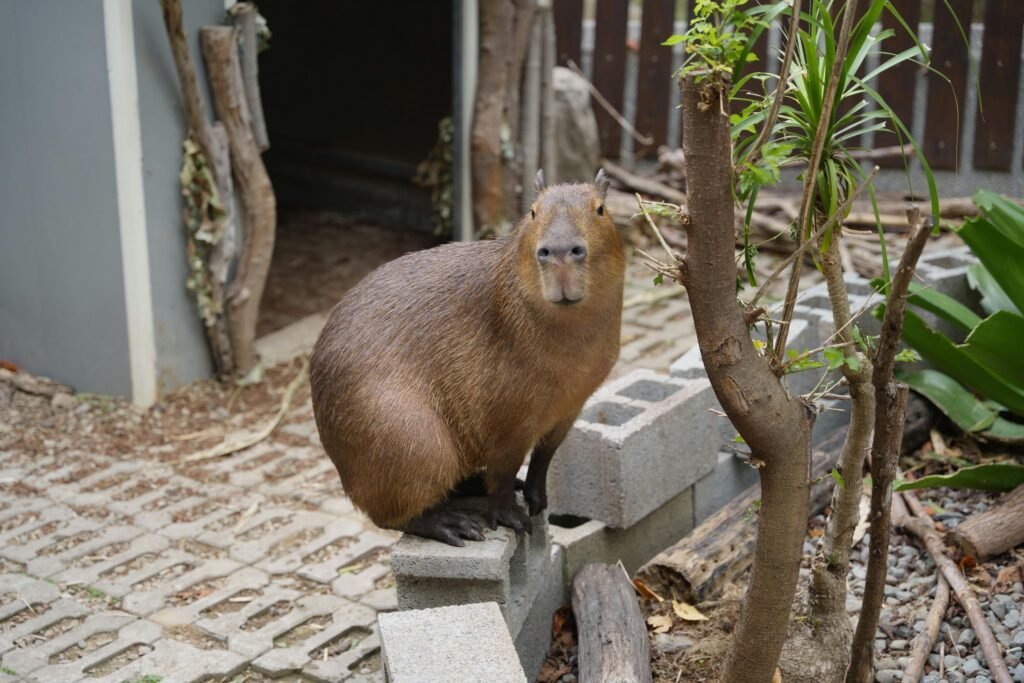
When people search for a capybara house, they often imagine a structure similar to a dog kennel or a garden shed. However, for a capybara, the house is only one small part of a much larger ecosystem. Because these animals are semi-aquatic, their enclosure must be designed around a permanent, deep-water source. Without water, a capybara cannot perform essential biological functions, including thermoregulation and skin hydration.
A professional-grade capybara house setup must include at least 100 to 200 square feet of land per animal, paired with a pool or pond that is at least 3 to 4 feet deep. This depth is crucial because capybaras use the water to escape perceived threats and to cool their massive bodies during the heat of the day. According to the San Diego Zoo Wildlife Alliance, these animals are incredibly agile swimmers with webbed feet, and they require enough space to dive and swim submerged.
Fencing is another critical foundational element. Capybaras are surprisingly strong and can be quite the escape artists if they find a weak point in their perimeter. A secure enclosure should feature at least 4 to 5 feet of sturdy fencing, such as chain link or heavy-duty wood, buried slightly into the ground to prevent the animals from pushing underneath. This ensures your rodent residence remains a safe haven for the herd.
The Semi-Aquatic Shelter: Water Quality and Access
The water feature within a capybara enclosure is often the most challenging part to maintain. Unlike a standard swimming pool, a capybara pond will be subject to heavy organic loads. Capybaras often defecate in the water, a natural behavior that helps them stay hidden from predators in the wild, which means a high-quality filtration system or a frequent drainage schedule is mandatory.
Stagnant water can lead to bacterial growth and skin infections, which can quickly compromise capybara happiness. To avoid this, many sanctuaries use a combination of biological filters and UV clarifiers to keep the water clear and safe. Additionally, the pond should have a sloped entry point, such as a ramp or a beach-style shore, to allow the animals to enter and exit the water without straining their joints or slipping.
According to National Geographic, capybaras can stay underwater for up to five minutes. Providing underwater furniture, such as smooth logs or large stones, can give them a place to rest while submerged, mimicking their natural habitat in the Pantanal. This level of environmental enrichment is what separates a basic cage from a true burrow-inspired retreat.
The Climate-Controlled Outbuilding: Winter Safety
Because capybaras are native to the tropical and subtropical regions of South America, they are not naturally equipped to handle freezing temperatures. If you live in a region that experiences frost or snow, a climate-controlled outbuilding is an absolute necessity. This structure serves as the winterized version of a capybara house, providing a draft-free environment where the temperature is maintained between 60°F and 75°F.
The flooring of this indoor habitat should be covered with thick rubber matting or a generous layer of hay to protect the animal’s sensitive foot pads from hard, cold surfaces. In many professional setups, radiant floor heating or overhead ceramic heat emitters are used to provide consistent warmth without the risk of the animal burning themselves on exposed heaters.
As noted by The Spruce Pets, capybaras are prone to frostbite on their ears and extremities if left in the cold for even short periods. A properly insulated capybara house ensures that even in the dead of winter, your giant rodents can remain warm and content. This indoor space should also have enough room for them to move around and socialize if the weather prevents them from going outside.
The Shaded Resting Area: Managing the Sun
While cold is a threat, the summer sun can be equally dangerous. Capybaras have sparse, coarse fur that provides very little protection against UV rays. In an outdoor enclosure, providing a shaded resting area is vital to prevent painful sunburns and heat exhaustion. This can be achieved through a combination of natural tree cover and man-made structures like lean-tos or umbrellas.
Many caretakers also include a mud wallow within the shaded resting area. Mud acts as a natural sunscreen and an effective way to repel biting insects. For a capybara, a mud bath is the ultimate spa day, helping to keep their skin supple and cool. Observing a capybara in a state of total relaxation within its burrow-inspired retreat is one of the most rewarding parts of being a guardian of the giant rodent.
The orientation of the capybara house should also take the path of the sun into account. Placing the entrance of the shelter away from the harsh afternoon sun helps keep the interior cool during the hottest parts of the day. A well-placed breeze, combined with shade and water, creates the perfect micro-climate for your capybaras to thrive.
Enrichment and Grazing: The Living Enclosure
A capybara enclosure shouldn’t just be a place to stay, it should be a place to live. Capybaras spend a significant portion of their day grazing, so providing a large, pesticide-free grassy area is essential. They prefer Bermuda, St. Augustine, or Timothy grasses, which help wear down their continuously growing teeth.
According to the Natural History Museum, environmental enrichment is key to preventing boredom in captive rodents. You can add puzzle feeders, floating logs in the pond, or different textures of hay to keep their minds active. A bored capybara can become destructive, often chewing on the walls of their capybara house if they don’t have enough appropriate items to gnaw on.
Final Thoughts: Creating a Home for Harmony
Building a capybara house and enclosure is a labor of love that requires a commitment to the animal’s wild heritage. From the depths of the pond to the insulation of the climate-controlled outbuilding, every detail contributes to the overall well-being of the herd. When we get the environment right, we are rewarded with the sight of these gentle giants living in a state of perfect harmony.Thank you for joining us at Capybara Happiness to explore the intricacies of capybara habitat design. Whether you are building a small cavy cabin or a sprawling sanctuary, remember that water, shade, and warmth are the three pillars of success. Let’s continue to build better homes for the world’s most lovable rodents!