
In the golden light of the South American wetlands, the typical capybara sports a coat of reddish-brown or dusty tan fur. However, every so often, a lucky observer might spot something truly unusual, a capybara with fur so deep and dark it looks like charcoal. This elusive black capybara animal has long sparked curiosity among photographers and wildlife enthusiasts, leading to questions about whether these dark variants are a separate species or a rare genetic anomaly.
At Capybara Happiness, we love diving into the rare and wonderful variations of the world’s favorite rodent. While the standard look is what most people recognize, the shadow-hued giant reminds us of the incredible genetic diversity within the species. In this article, we will explore the science behind dark pigmentation, the role of environmental factors, and what it truly means to be a melanistic leaning Capybara in the wild.
The Science of Darkness: Understanding Melanism
When we see the dark pigmented Capybara, we are looking at a biological phenomenon known as melanism. Melanism is essentially the opposite of albinism, it is a development of the dark-colored pigment melanin in the skin or its appendages. In the animal kingdom, this often results in individuals that are significantly darker than their peers, such as black panthers, which are actually melanistic leopards or jaguars.
While true, total melanism is exceptionally rare in capybaras, many individuals display a melanistic-leaning phenotype. This means they possess a higher concentration of eumelanin, which produces black or dark brown tones, rather than pheomelanin, which produces red and yellow hues. According to research on mammalian coat color genetics, these variations are often caused by mutations in specific receptors that control pigment production.
It is important to note that the anomalous dark rodent is not a different subspecies. It is simply a beautiful variation of the Hydrochoerus hydrochaeris. At Capybara Happiness, we celebrate these unique individuals as part of the broader capybara popularity in German and global cultures, where diversity in nature is highly valued.
The Wet-Slicked Illusion: Real Black vs. Optical Effects
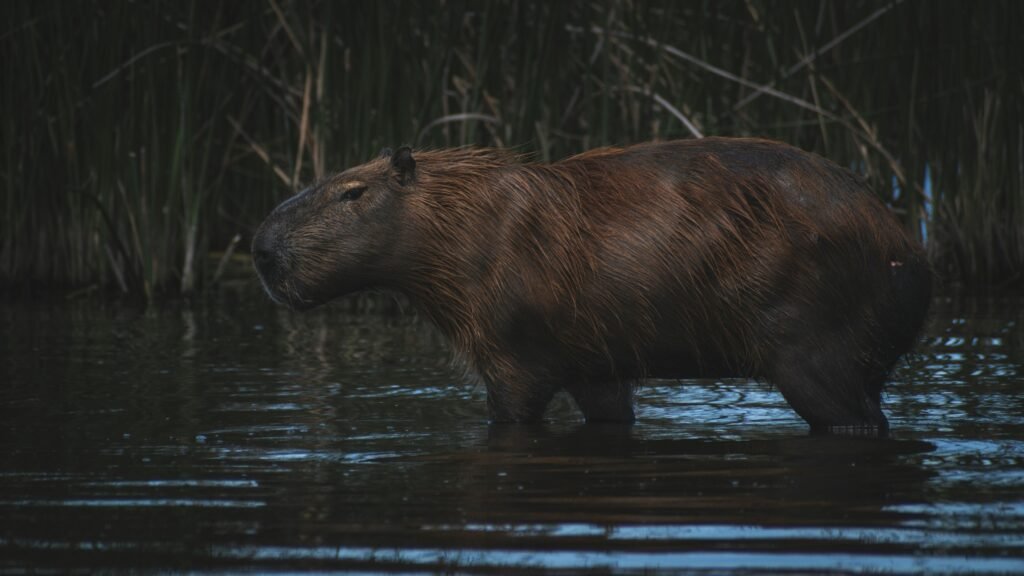
One of the most common reasons people believe they have spotted a black capybara animal is actually a matter of simple physics. Capybaras are semi-aquatic mammals that spend a vast portion of their day submerged in rivers and marshes. When their coarse, brittle fur becomes saturated with water, it loses its ability to reflect light in the same way, causing the color to deepen significantly.
A capybara that looks cinnamon-colored when dry can easily transform into the shadow hued giant after a quick dip. The water causes the hair shafts to clump together, revealing the darker skin beneath and intensifying the appearance of the pigment. This optical illusion is a frequent point of confusion for those searching for capybara price and availability who might be hoping for a specific color of pet.
Furthermore, lighting plays a massive role. In the deep shadows of the Amazon rainforest or under the heavy canopy of the Pantanal, a standard capybara can appear nearly black to the naked eye. True dark pigmented Capybara sightings are confirmed only when the animal remains dark even after its fur has completely dried in the direct sun.
Survival of the Darkest: Evolutionary Advantages
Does being a black capybara animal help or hurt an individual’s chances of survival? In evolutionary biology, coat color is rarely accidental. For many species, dark fur provides better camouflage in dense, shady environments. This is known as adaptive melanism, where the darker individual is less visible to predators in low-light conditions.
However, for Capybaras, there is a trade-off. Darker colors absorb more heat from the sun. In the sweltering heat of the South American tropics, a black coat could lead to overheating much faster than a lighter one. This may be why true melanism remains rare, the heat-absorption disadvantage often outweighs the camouflage benefit in open savanna regions.
Interestingly, studies by the World Wildlife Fund suggest that color variations can also be linked to diet and health. A robust, well-nourished capybara may produce more vibrant or deeper pigmentation than one struggling with parasites or malnutrition. Thus, a rich, dark coat might sometimes be a signal of a high-quality mate within the herd.
Genetic Rarity and the Anomalous Factor
Because capybaras are highly social animals that live in large groups, genetic traits are passed down and diluted through a large breeding pool. For a melanin Capybara to appear, both parents often need to carry specific recessive traits, or a new spontaneous mutation must occur. This makes the anomalous dark rodent a prized sight for wildlife photographers.
There have been documented cases of dark-coated capybaras in various regions, but no specific black colony exists. They are the black sheep of the family, standing out in a crowd of auburn siblings. According to the Natural History Museum, these rare sightings help scientists track genetic health and diversity within wild populations.
For enthusiasts, the search for these rare individuals adds a layer of excitement to wildlife tours. Whether you are in the wetlands of Brazil or visiting a Capybara Zoo, keeping an eye out for these darker variants reminds us that nature always has a few surprises up its sleeve.
Caring for the Diversity of the Species
Regardless of whether a capybara is auburn, tan, or a black capybara animal, their needs remain the same. They require vast amounts of water, a specialized diet of grasses, and the company of a social herd. As we discuss in our post about Legal capybara ownership, the aesthetic of the animal should never be the primary reason for wanting to bring one home.
True love for capybara means appreciating them for their chill nature and ecological importance, not just their coat color. The dark Capybara is a wonderful example of the wedded-footed wonder in all its forms. By supporting conservation efforts, we ensure that the genetic library of the wild remains intact, allowing these rare color variants to continue appearing for generations to come.
According to the Rainforest Alliance, protecting the habitat is the only way to protect the species’ diversity. When wetlands are drained or polluted, we lose the unique environments that allow these genetic anomalies to flourish. Raising awareness for the capybara includes celebrating the rare ones just as much as the common ones.
Final Thoughts on the Shadow-Hued Giant
The black capybara animal remains one of the most striking sights in the animal kingdom. Whether it is a true melanistic individual or simply a very wet, dark-brown cavy in the shade, the shadow-hued giant captures our imagination. It reminds us that even in a species known for its consistency and calm, there is room for remarkable variation.
Next time you are browsing through photos of these amazing animals, look closely at the depth of their coat. You might just be looking at the anomalous dark rodent, a rare gem of the South American marshes. Stay tuned to Capybara Happiness as we continue to explore the fascinating colors and behaviors of the world’s most lovable giant rodent!