
Scroll through any wildlife photography feed or social media platform, and you will quickly find dozens of photos showing animals sitting on capybaras. From tiny songbirds perched squarely between their ears to turtles sunbathing on their broad backs, these giant South American rodents have earned a global reputation as the friendliest creatures in the animal kingdom.
While viral internet memes playfully refer to them as nature’s furniture, the biological reality behind wildlife resting on capybaras is rooted in ecology, evolutionary survival, and mutual benefit. Rather than acting out of simple whimsy, these gentle semi-aquatic mammals engage in fascinating ecological partnerships across tropical wetlands. Let us explore the science, behaviors, and specific species behind non-aggressive capybara co-existence in the wild!
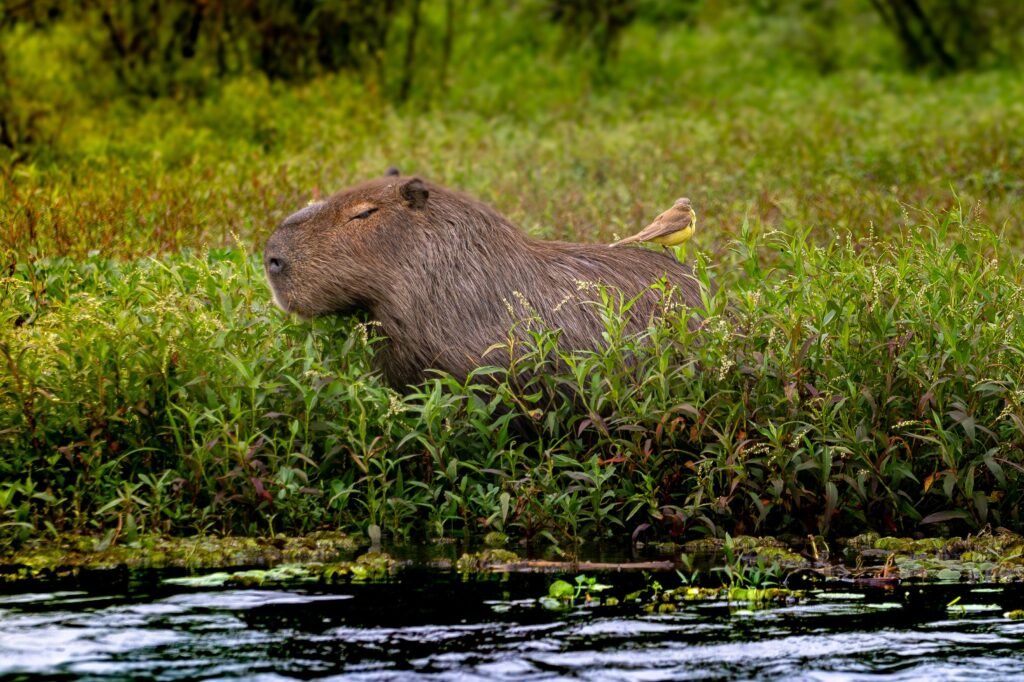
The Science of Mutualism: Why Birds Perch on Capybaras
In ecology, when two different species interact in a way that benefits both parties, scientists call the relationship mutualism. One of the most common examples of symbiotic relationships with giant rodents occurs between capybaras and native Neotropical birds.
Because capybaras spend hours wading through muddy riverbanks, tall marsh grasses, and shallow wetlands, their coarse fur frequently collects ticks, lice, and biting insects. For insect-eating birds, a resting capybara represents an all-you-can-eat buffet that stays remarkably still.
Common Bird Passengers in the Wild
- Yellow-Headed Caracaras: These small raptors frequently ride on capybaras’ backs, picking off stubborn ticks and external parasites while keeping a sharp lookout from an elevated vantage point.
- Cattle Tyrants: Agile flycatchers that use capybaras acting as living perches to spot and snap up insects disturbed as the large rodent walks through tall grass.
- Wattled Jacanas: Long-toed wetland birds that step gracefully over resting capybaras while foraging for aquatic insects along floating vegetation.
- Cattle Egrets: White wading birds that follow grazing herds closely to catch grasshoppers and frogs flushed out by the capybaras’ movements.
In exchange for providing free meals and a dry resting spot above muddy water, the capybara receives essential pest control and an early-warning alarm system when predators approach. You can learn more about how skin care and parasite prevention impact cavy health in our comprehensive Capybara Happiness Care Guide.
Sunbathing Companions: Turtles, Caimans, and Crocodilians
Birds are far from the only creatures that enjoy sharing personal space with the world’s largest rodent. Along sunlit riverbanks in the Brazilian Pantanal and Venezuelan Llanos, freshwater turtles frequently climb onto partially submerged capybaras to bask in the warmth.
Because capybaras spend the hottest hours of the day resting motionless in shallow water to regulate their body temperature, their broad, flat backs offer ideal dry islands for cold-blooded reptiles. The capybara’s thick skin and calm temperament mean it barely notices the extra weight of a sunbathing turtle.
Even more surprising to wildlife observers is seeing capybaras resting peacefully just feet away from spectacled caimans. While large crocodilians can pose a threat to young pups, adult caimans generally ignore full-grown, 120-pound capybaras during the daytime when both species are busy thermoregulating on sunny banks. Detailed ecological observations documented by the San Diego Zoo Wildlife Alliance explain how these peaceful daytime truces unfold across shared wetland habitats.
Why Are Capybaras So Unbothered by Other Species?
To understand why animals sitting on capybaras happens so frequently without conflict, we have to examine the rodent’s evolutionary biology and temperament. As strict herbivores that graze on abundant aquatic plants and native grasses, capybaras never need to compete with birds, monkeys, or reptiles for food.
Unlike territorial carnivores or aggressive primates, capybaras conserve energy by avoiding unnecessary confrontation. Chasing away a harmless bird or small monkey burns valuable calories and draws unwanted attention from apex predators like jaguars and anacondas.
Furthermore, capybaras possess a remarkably low-stress physiology suited for large herd living. Wild groups routinely contain 10 to 40 individuals living shoulder-to-shoulder, meaning these animals are naturally conditioned to tolerate constant physical contact.
Mammals, Monkeys, and Domestic Animals Joining the Herd
Beyond wild reptiles and birds, non-aggressive capybara co-existence extends to fellow mammals, both in tropical forests and in managed wildlife sanctuaries around the world. In South American river forests, capuchin monkeys and squirrel monkeys occasionally groom capybaras or hitch brief rides while foraging near river edges.
In zoological parks, rescue sanctuaries, and Japanese hot spring exhibits, capybaras regularly form close sleeping piles with ducks, rabbits, cats, dogs, and even guinea pigs. Because capybaras radiate steady body heat and exhibit slow, predictable body language, smaller animals instinctively view them as safe, comforting companions.
Conservation researchers studying Neotropical biodiversity emphasize that capybaras serve as vital ecosystem connectors. According to habitat assessments compiled by the World Wildlife Fund and species distribution records maintained by the IUCN Red List, preserving healthy wetland corridors protects not just the capybara, but the entire web of birds, reptiles, and mammals that rely on their peaceful presence.
Final Thoughts on Nature’s Friendliest Host
Whether it is a yellow-headed caracara hunting ticks or a freshwater turtle soaking up the afternoon sun, wildlife resting on capybaras showcases one of nature’s most charming ecological partnerships. By combining a calm temperament with mutually beneficial habits, the capybara proves that cooperation and peaceful co-existence can thrive even in the wildest corners of the planet!
Join the Herd at Capybara Happiness!
Want to dive deeper into the peaceful world of capybaras? Whether you are looking for in-depth care guides, habitat setup tips, or simply want to stay updated on these amazing giant rodents, we have got you covered. Head over to the Capybara Happiness Website to explore our full library of expert articles, dietary advice, and heartwarming capybara content designed to keep you (and your favorite semi-aquatic friends) smiling every day!