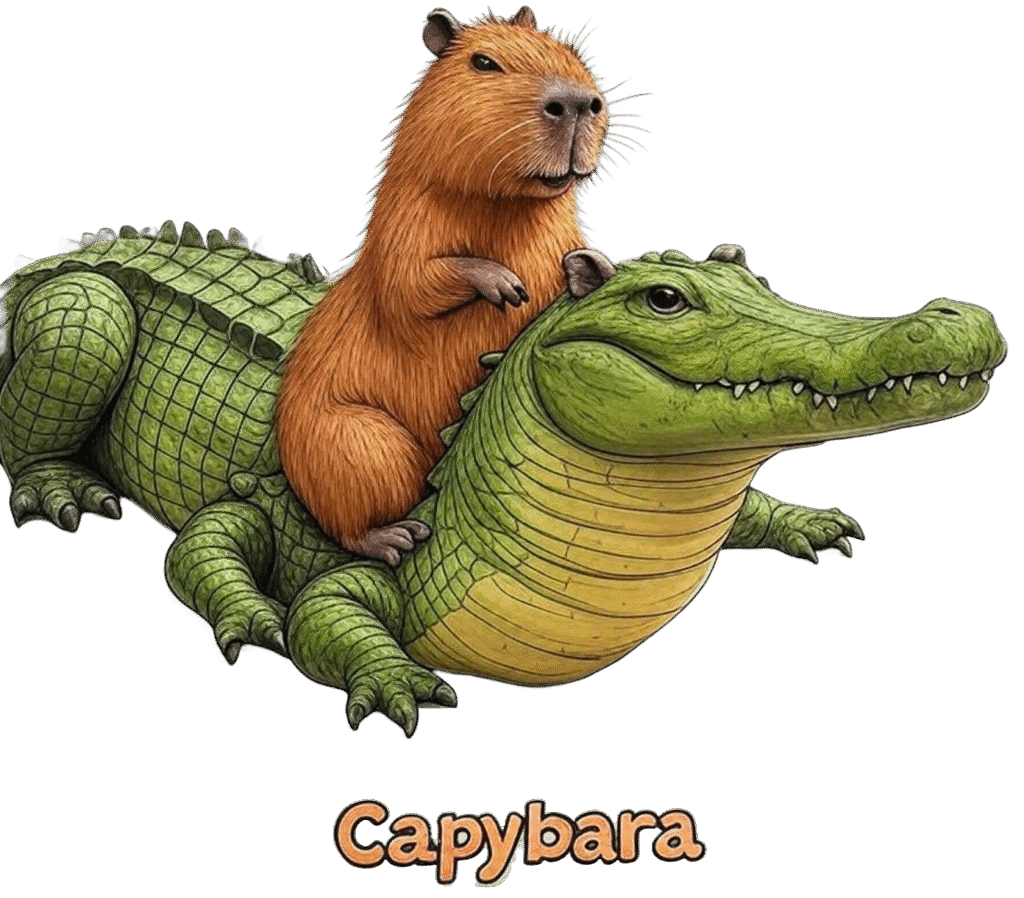
If you have ever seen a video of a capybara sitting calmly while a group of ducklings naps on its back, you might have wondered if you were looking at a giant rodent or a particularly Zen dog. This comparison isn’t just a coincidence of internet memes. Across the globe, fans and researchers alike have dubbed the world’s largest rodent as the Golden Retriever of the wetlands due to its incredibly social, non-aggressive, and communal nature.
At Capybara Happiness, we are fascinated by how these animals bridge the gap between wild wildlife and the pack mentality we usually associate with our domestic companions. While they are certainly not canines, the behavioral overlap between capybara and dogs is a key reason for their massive popularity. In this article, we will explore the barking secrets, the social structures, and the gentle temperament of this square-snouted swimmer.
The Barking Giant: A Voice Like a Hound
One of the most startling similarities between capybara and dogs is their vocalization. If you approach a wild herd in the Pantanal and they sense a predator, you won’t hear a typical rodent squeak. Instead, you will be met with a sharp, guttural woof that sounds remarkably like a large dog’s bark.
According to research from the San Diego Zoo Wildlife Alliance, this bark is a sophisticated alarm call used to alert the entire group to move toward the safety of the water. When one webbed-footed pack member barks, the others immediately take notice, showing a level of coordinated group defense that is very similar to a pack of canines protecting their territory.
This barking isn’t just for danger, either. Capybaras have a wide range of vocalizations, including whistles, clicks, and even a contented purr when they are relaxed. This complex communication system is a hallmark of highly social animals, which is why so many people feel a canine connection when observing them in the wild or at a zoo.
Social Intelligence: The Pack Mentality of the Marsh
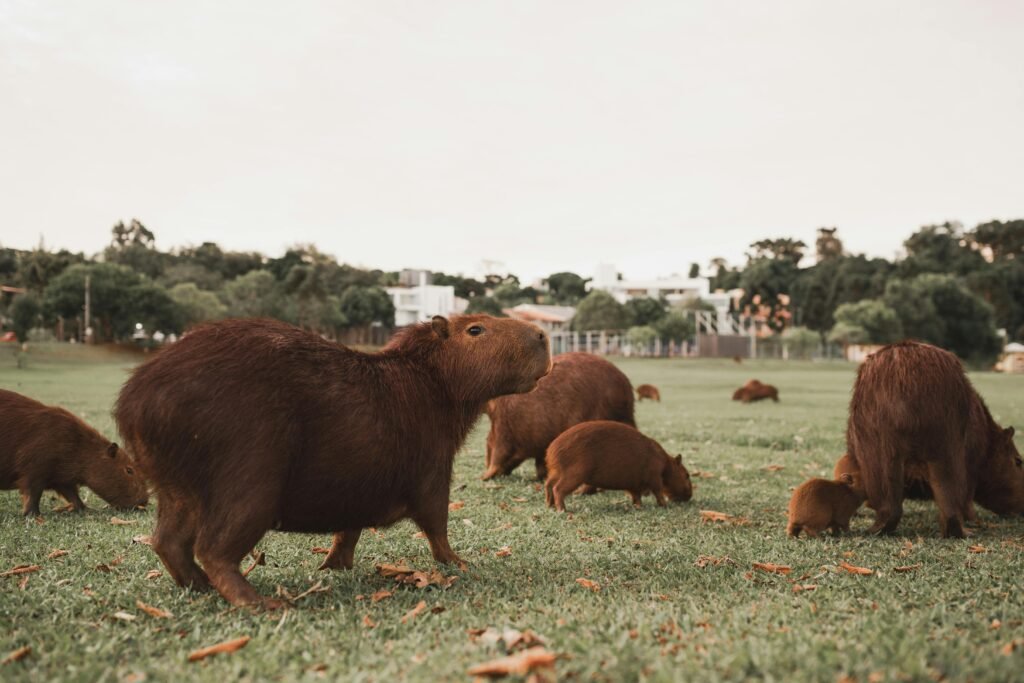
In the animal kingdom, capybaras are what biologists call obligate social animals, meaning they cannot thrive or often even survive alone. Just like a dog thrives on being a good boy within its human family, a capybara finds its identity within its herd. These groups can range from 10 to 40 individuals, led by a dominant male who oversees the safety of the group.
What makes them truly the Golden Retrievers of the wild is their inclusive social attitude. They are famously tolerant of other species, often acting as a living chair for birds, monkeys, and even turtles. This high level of interspecies harmony is a core pillar of our mission at Capybara Happiness, as we believe these animals serve as the ultimate Ambassadors of Chill.
According to National Geographic, their social structure even includes alloparenting. This means that multiple females in the herd will nurse and care for all the pups in the group, regardless of who the biological mother is. This communal nursery system ensures that the 140-pound water Pup grows up with the protection and social learning of the entire pack.
Training and Temperament: Why They Aren’t Just Wild Dogs
Because of the similarities between capybara and dogs, many people are tempted to look for a capybara pet for sale. It is true that they are highly intelligent and can be house trained to an extent. They can learn their names and even follow basic commands if positive reinforcement (and plenty of corn) is involved.
However, the square-snouted swimmer has needs that a Labrador could never dream of. They require a permanent deep-water source for swimming and thermoregulation. Without a pool or a pond, a capybara’s skin can become dry and cracked, and their mental health will rapidly decline. Unlike a dog that is happy with a walk around the block, a capybara needs a specialized semi-aquatic habitat.
As noted by The Spruce Pets, their social needs are also much more intense than a dog’s. While a dog can stay home while you go to work, a capybara can become destructively lonely without a constant companion of its own species. This is why we always advocate for herd ownership rather than keeping a solitary animal.
The Golden Temperament: Tolerance and Peace
The nickname Golden Retriever of the wetlands comes primarily from their lack of a fight reflex. When a capybara is annoyed or stressed, its first instinct is almost always to flee into the water rather than to bite. This gentle disposition is why you see so many photos of them coexisting with predators like caimans.
This doesn’t mean they are defenseless, they have incredibly sharp incisors that grow continuously throughout their lives. However, they choose to use these tools for grazing on tough grasses rather than for aggression. This choice of peace over conflict is a powerful lesson in capybara wisdom that resonates with people all over the world.
Studies by the Natural History Museum highlight that their high social tolerance is an evolutionary adaptation. In the crowded floodplains of South America, being able to live in close quarters with others (and even other species) without constant fighting is a massive survival advantage. It allows them to share the best grazing spots and the safest water holes.
Identifying the Water Pup: Physical Dog-Like Traits
If you look closely at the face of a square-snouted swimmer, you’ll see several dog-like features. Their blunt muzzle and large, dark eyes give them a soulful expression that many owners find eerily similar to a hound. They even have a similar way of scenting their environment, using a specialized scent gland called a morrillo located on top of their snout.
The webbed-footed pack member also shares a similar play drive when young. Capybara pups can be seen chasing each other, zoomie style, through the grass and performing popcorning jumps similar to guinea pigs but on a much larger scale. This playful energy further cements the comparison to a litter of puppies.
Despite these similarities, it is important to remember that they are the 140-pound water Pup of the Caviidae family. They are more closely related to guinea pigs than to any canine. Understanding this biological distinction helps us provide the correct diet and medical care that an exotic animal requires, ensuring they live a long and healthy life.
Final Thoughts: A Different Kind of Best Friend
The capybara may be a Golden Retriever of the wetlands, but it is a creature entirely unique to its environment. Its ability to communicate with a bark, care for its pack like a family, and maintain a chill attitude in the face of nature’s predators is nothing short of heroic.
By celebrating the similarities between capybara and dogs, we can better appreciate the social complexity of the animal kingdom. However, we must also respect the differences. A capybara doesn’t want to play fetch with a tennis ball, it wants to forage for aquatic plants and swim in a sun-drenched lagoon with its friends.Thank you for joining us at Capybara Happiness to learn about these incredible water pups. Whether you are observing them from afar or advocating for their conservation, remember that every capybara deserves a life filled with harmony, water, and a loyal pack of its own!