
If you have ever found yourself scrolling through endless photos of world-class loungers and wondered, Where is the capybara from?, you are looking toward the vibrant and diverse continent of South America. This massive region, characterized by its winding river systems and vast wetlands, is the only place on Earth where these giant rodents exist in their natural state. Understanding the natural territory of the semi-aquatic cavy is the first step in appreciating why they have evolved into the peaceful, water-loving creatures we adore today.
At Capybara Happiness, we believe that understanding an animal’s roots is essential for its modern conservation and care. Whether you are a student, a traveler, or a dedicated Capy-fan, this guide will take you on a journey through the ancestral origins of the largest rodent. We will explore the specific countries, biomes, and environmental conditions that make up the capybara’s home, answering once and for all where to find capybaras in the wild.
The Continental Giant: South America’s Resident
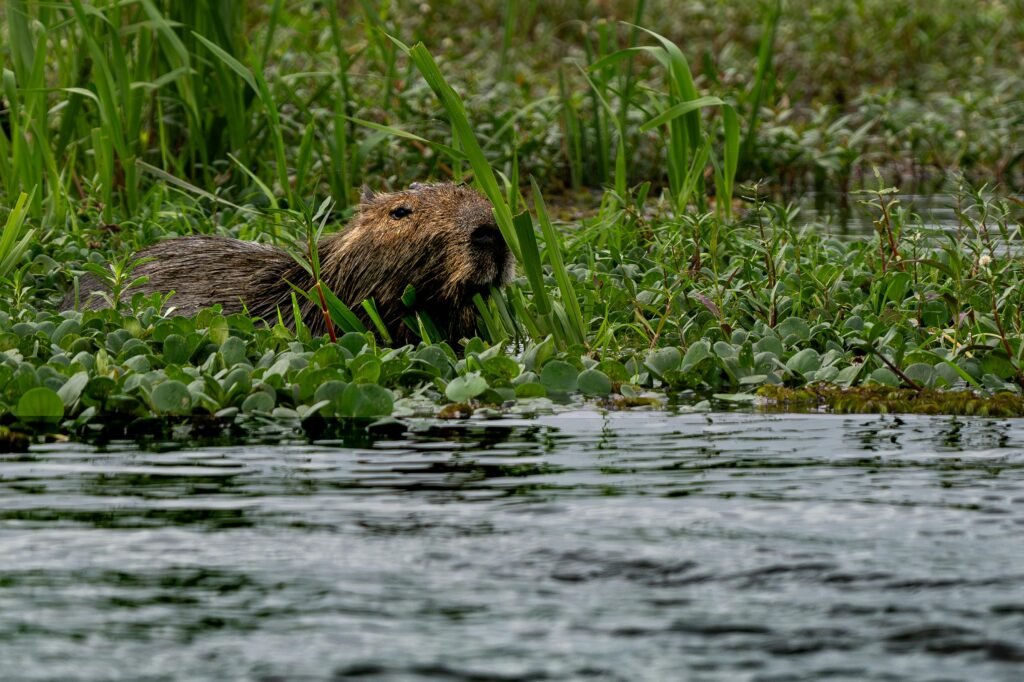
The capybara (Hydrochoerus hydrochaeris) is exclusively native to South America, with a range that spans nearly the entire continent. From the northern reaches of Panama (where a smaller subspecies exists) down to the grassy plains of northern Argentina, these animals have claimed a massive variety of landscapes. However, there is one country where you won’t find them naturally, Chile. The towering Andes Mountains act as a natural barrier that has kept capybaras from spreading to the Pacific coast.
According to the San Diego Zoo Wildlife Alliance, the native range of the capybara is defined primarily by the presence of water. They are never found far from a permanent river, lake, or swamp. This geographic limitation is due to their semi-aquatic biology, they rely on water not just for hydration, but for safety from predators, thermoregulation, and even reproduction.
This vast distribution is a testament to the animal’s resilience and adaptability. Whether they are living in the dense canopy of the Amazon or the seasonally flooded savannas of Venezuela, the capybara from South America has learned to thrive in any environment that provides a steady supply of grass and a place to swim. This adaptability is a core part of the capybara’s wild success as a species.
The Pantanal and the Llanos: Hotspots of the Marsh
When researchers discuss where to find capybaras in the wild, two specific regions always dominate the conversation, the Pantanal in Brazil and the Llanos in Venezuela and Colombia. These are the capybara capitals of the world, where the population density is highest and the social structures of the herd are most visible. In these regions, the natural territory of the semi-aquatic cavy is on full display.
The Pantanal is the world’s largest tropical wetland area, and it offers the perfect mix of open grazing land and deep, slow-moving water. According to National Geographic, during the rainy season, this region becomes an inland sea, allowing capybaras to move freely across vast distances. In the dry season, the animals congregate in massive groups around the remaining water holes, leading to the spectacular social gatherings often seen in nature documentaries.
In the Llanos of Venezuela, where the capybara legend began for many local cultures, the animals have become a staple of the landscape. They share these seasonally flooded plains with anacondas, caimans, and a staggering array of birdlife. This high-density living is what shaped the capybara’s famous social tolerance, as they must constantly share limited resources with both their own kind and other species in the ancestral origins of the largest rodent.
The Amazon Basin: Life Under the Canopy
While the open wetlands of the Pantanal are the most famous spots for sightings, a significant number of capybaras from South America call the Amazon Basin home. In this dense, rainforest environment, the animals stick close to the banks of the Amazon River and its thousands of tributaries. Here, the natural territory of the semi-aquatic cavy is more vertical and enclosed, surrounded by towering trees and tangled vines.
Life in the Amazon is a bit different for the Water Pig. Instead of the massive herds seen in the open plains, Amazonian capybaras tend to live in smaller, more elusive family groups. The thick vegetation provides more cover from predators like jaguars, but it also makes the animals harder for humans to spot. This region highlights the ancestral origins of the largest rodent as a creature that is as comfortable in a shadowy creek as it is on a sunny riverbank.
As noted by the World Wildlife Fund (WWF), the health of the Amazon River is directly linked to the survival of the capybara. Pollution and deforestation in this region threaten the delicate balance of the riverbanks where capybaras graze and raise their young. Protecting the native range of the capybara in the Amazon is a vital part of global conservation efforts to preserve the lungs of the planet.
Southern Limits: The Pampas of Argentina and Uruguay
As we move further south, the native range of the capybara shifts into the temperate grasslands known as the Pampas. In countries like Uruguay and Argentina, the climate is cooler and the landscape is dominated by vast, fertile plains. Here, the capybara from the south has adapted to a more seasonal environment, where they must contend with cooler winters and different types of forage.
Even in these grassy heartlands, the rules of the natural territory of the semi-aquatic cavy apply. They are found along the Paraná and Uruguay Rivers, using the reed beds as nesting sites and protection from the wind. This southern boundary of their range shows just how far the ancestral origins of the largest rodent extend, covering almost 4,000 miles from north to south.
Recent urbanization in areas like Nordelta, Argentina, has led to a modern clash between human development and the capybara from the marsh. As houses are built on former wetlands, the capybaras have stayed put, leading to surreal images of giant rodents strolling through manicured lawns. This situation serves as a reminder that we are the ones encroaching on the natural territory of the semi-aquatic cavy, not the other way around.
Evolutionary Echoes: Why South America?
Why is the capybara from South America and nowhere else? The answer lies in the continent’s long history as an island continent. For millions of years, South America was isolated from North America, allowing unique groups of mammals to evolve in a world without competition from northern predators. This is where the ancestral origins of the largest rodent began, within a group of South American rodents known as Caviomorphs.
According to the Natural History Museum, the ancestors of the capybara were even larger than the ones we see today—some were the size of a grizzly bear! While those giants eventually went extinct, the modern capybara survived by perfecting the semi-aquatic lifestyle. They carved out a niche in the South American wetlands that no other large mammal could fill, becoming the undisputed kings of the marsh.
Understanding this evolutionary journey is a core part of our mission at Capybara Happiness. When we look at a capybara, we aren’t just seeing a cute animal, we are seeing a survivor from a prehistoric era. By respecting the capybara’s wild heritage, we can better advocate for the protection of the rivers and wetlands that have sustained them for millions of years.
Final Thoughts: Protecting the Marsh
The native range of the capybara is a tapestry of rivers, swamps, forests, and plains that stretches across an entire continent. From the high-energy capy-capitals of the Pantanal to the quiet creeks of the Amazon, the capybara from South America is a symbol of biological success and interspecies peace.
By knowing where to find capybaras in the wild, we can better target our conservation efforts and appreciate the environmental factors that make these animals so unique. Whether you are dreaming of a trip to the Llanos or supporting conservation from home, remember that the Ambassador of Chill is a gift from the South American wetlands, a place we must all work together to protect.