
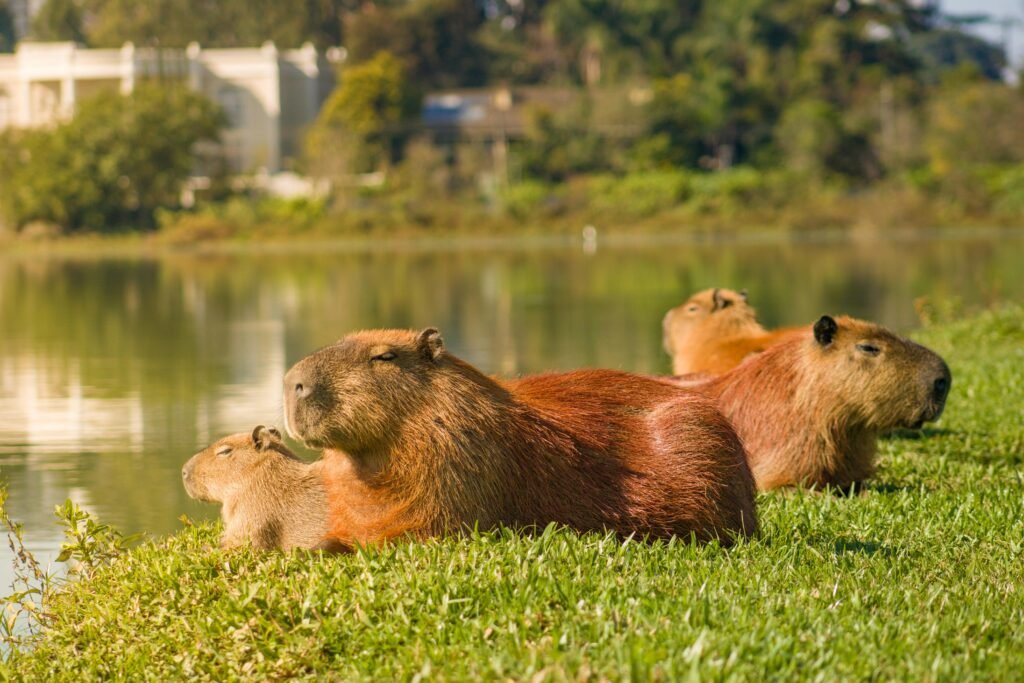
When you look at a herd of capybaras lounging together on a sunny riverbank, it looks like a picture of absolute chaos-free peace. They appear completely unbothered, huddled closely like a collection of giant, furry stones. However, beneath this incredibly relaxed exterior lies a highly complex network of communication, hierarchy, and survival strategies that researchers are still piecing together. Figuring out how these massive rodents manage such high levels of social harmony is a fascinating journey into the evolutionary puzzle of Capybaras.
At Capybara Happiness, we are deeply passionate about looking beyond the surface level of the internet’s favorite animal. While a simple capybara puzzle or game might show them interacting with birds or crocodiles, the real-world social structure of these animals is far more intricate. In this guide, we will break down the hidden rules of the herd, explore their unique vocal library, and attempt to solve the cavy behavioral conundrum that makes them the animal kingdom’s ultimate diplomats.
The Hierarchy of the Herd: Solving the Social Dynamic
Capybaras are strictly social creatures, living in stable groups that typically range from 10 to 30 individuals. During the harsh dry seasons in South America, these smaller family units often merge around dwindling water holes, creating massive super-herds of over 100 animals. Managing the peace in a crowd that large requires a clear social contract, which is where the dominant male steps in to lead.
The dominant male holds the highest rank in the group, but his position is not maintained through constant, bloody warfare. Instead, he uses subtle posturing, scent marking, and strategic positioning to assert his authority over subordinate males. According to the San Diego Zoo Wildlife Alliance, the leader secures the best grazing spots and the center of the herd, which offers the maximum amount of protection from lurking predators like jaguars.
This structured lifestyle is a key reason why we emphasize the importance of capybara herd dynamics for anyone studying their welfare. A lone capybara is a stressed capybara, they rely entirely on the collective eyes and ears of their companions to feel safe. Witnessing the way a group moves, rests, and grazes in perfect synchronization is like watching a beautifully choreographed dance, showing that their peaceful reputation is built on a foundation of strict mutual cooperation.
Scent and Sounds: The Tools of Communication
To truly decode the social matrix, we have to look closely at how capybaras share information with one another. Unlike human communication, a capybara relies heavily on chemical signals and a surprising variety of vocalizations. This sensory layer of their lives adds a fascinating piece to the evolutionary puzzle of Capybaras, proving they are far more expressive than they look in silent photos.
The most distinct physical tool for communication is the morrillo, a dark, raised, hairless scent gland located on the bridge of a male’s nose. Adult males rub this sticky gland against trees, river reeds, and even other herd members to leave a clear chemical signature of their presence and health status. As noted by National Geographic, they also have specialized anal scent glands that act like a biological barcode, allowing individual animals to recognize each other instantly through a simple sniff.
Vocal communication is equally complex. When you stand near a healthy herd, you will hear a constant background murmur of clicks, squeaks, and low purrs that help keep the group together while they graze in tall grass. If a predator approaches, the sentinel animal will emit a loud, explosive bark that sounds exactly like a dog. This alarm call triggers a chain reaction, causing the entire herd to sprint instantly into the safety of the nearest deep water source.
The Kindergarten of the Wetlands: Communal Nurseries
One of the most remarkable solutions to the cavy behavioral conundrum is how capybaras raise their young. When a female gives birth after a gestation period of roughly 150 days, she introduces her highly developed, precocial pups to the herd almost immediately. Within days, these miniature capybaras are running, swimming, and eating grass alongside the adults.
To ensure the survival of these vulnerable young animals, the herd operates a system of communal nurseries, or creches. Mothers take turns watching over all the pups in the group, protecting them from caimans and birds of prey while the other females forage for much-needed calories. This collective babysitting strategy is a beautiful demonstration of their deep social bonds and a major topic in our guides on capybara reproductive habits.
According to research from the University of London, pups will even nurse from any lactating female in the herd, not just their own biological mother. This cooperative parenting style reduces the individual burden on the mothers and strengthens the social ties of the next generation from the very moment they are born. It shows that the chill nature of the adult capybara is actively nurtured through a childhood surrounded by a supportive community.
Interspecies Diplomacy: The Ultimate Social Mystery
The most famous aspect of the capybara social matrix is their incredible tolerance for other animal species. The internet is full of pictures showing turtles, birds, monkeys, and even small caimans resting on top of a sleeping capybara. While this looks like an adorable fantasy, it is actually a highly practical example of ecological symbiosis in action.
Birds, such as the yellow-headed caracara, regularly use capybaras as mobile feeding stations, picking ticks, horseflies, and other irritating parasites directly out of their coarse fur. The capybara gets a free, thorough grooming session, while the bird gets an easy meal. This mutual benefit creates a relaxed relationship that allows different species to coexist peacefully in the crowded South American wetlands.
As noted by the IUCN Red List, this lack of aggression is a defining characteristic that has allowed the species to remain stable across most of its native range. By not wasting precious metabolic energy on unnecessary fights with neighbors, the capybara can focus entirely on grazing, swimming, and maintaining the internal peace of its own herd.
Final Thoughts: Putting the Pieces Together
Solving the evolutionary puzzle of Capybaras reveals an animal that is deeply intelligent, intensely loyal, and perfectly adapted to its environment. They are not just simple, oversized guinea pigs, they are master diplomats of the marshlands, showing us that cooperation is often the most effective tool for long-term survival.Thank you for exploring the depths of the capybara social matrix with us at Capybara Happiness. By studying the way they communicate, raise their families, and interact with the world around them, we gain a much deeper respect for these gentle giants. The next time you see a photo of a herd, remember that you are looking at a highly sophisticated, beautifully balanced society that has mastered the art of living together in peace.